
The Broker's Table · Episode 6 · November 6, 2026
Squashing Imposter Syndrome: The Only Woman in a Room of 200 Engineers
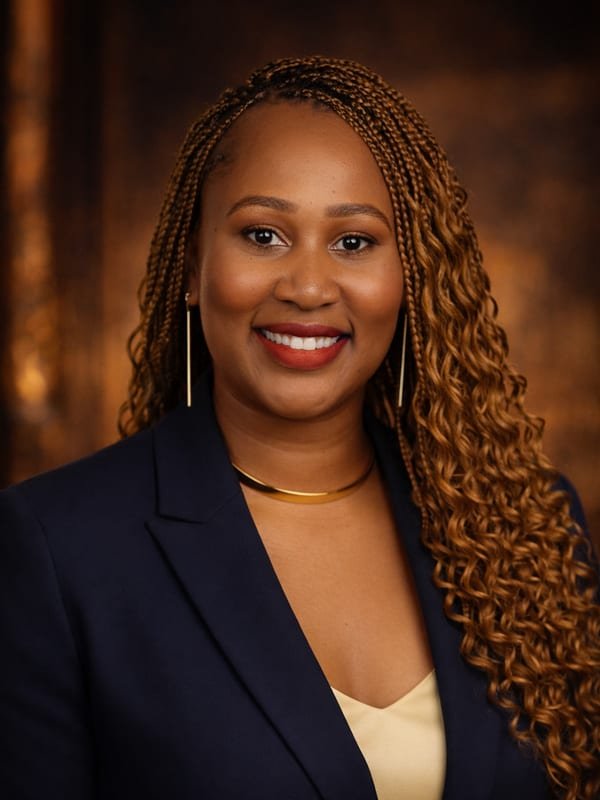 Esther Jackson-Stowell
Open the audio directlyUse the player to pause, seek, or change playback speed.
Dr. Angela Trego, a former rocket scientist, shares her journey from feeling like an imposter in a room of 200 male engineers to becoming a leading voice in confidence and communication. She reveals how she overcame self-doubt and now empowers others to lead boldly.
At the table
Esther and Dr. Trego explore the origins of imposter syndrome, the unique challenges women face in STEM and business, and the pivotal shift from questioning belonging to focusing on contribution.
What this conversation covers
- Navigating male-dominated engineering environments
- The initial panic of imposter syndrome in a new role
- Shifting from ‘Do I belong?’ to ‘What can I contribute?’
- Why developing people became more fulfilling than engineering systems
- Understanding confidence as a critical soft skill
A line worth keeping
Confidence is not a physical trait. All too often we think it’s just like eye color.
Mentioned in this episode
- Dr. Angela Trego
- Boeing Phantom Works
- The Broker’s Table community, for women building faith, family, and lasting wealth
The Broker’s Table is hosted by Esther Jackson-Stowell. New conversations on faith, family, and the kind of wealth that outlives you.
Episode transcript
Esther Welcome to the Brokeless Table, the podcast where we sit down with bold thinkers, trailblazers, and visionary leaders to talk about what it really takes to succeed. I'm your host, Esther Stoll, and I am so grateful you're here with us today. Today's guest is a woman who defies every boundary. She is a patent-holding rocket scientist, a former Fortune 500 senior engineer, and now one of the most sought-after voices in confidence and communication. She is a number one best-selling author and award-winning global speaker who has inspired audiences across six continents and a fierce champion for women and underrepresented voices in STEM and business. She holds certifications as a professional engineer, project management professional, and a fellow of the Higher Education Academy among many others. She has been recognized by Utah Business as one of the 30 Women to Watch, earned the Women in Tech Council Rising Star Award, and holds two patents with over 90 publications to her name. But beyond every title and accolade, she is a woman who chose people over things and built an entire career around helping others overcome self-doubt and lead boldly. A very warm welcome to the Berkras table, Dr. Angela Trigo. Thank you. Thank you so much for being here. I'm very excited to be here today. I have to tell you, we were just talking right before this started and how proud I am and how I'm just amazed by what you're doing and because it is needed, especially in this place that we're in. We're in Utah and Utah is not known for seeing women in certain tables, but that is changing and you are leading that charge and it is so wonderful to know that I know you and I can support you and most of all to have here to talk about those things. So we're going to go into our first question for the day, Dr. Trigo. You began your career as a mechanical engineer, a rocket scientist, no less, surrounded by colleagues who were mostly men, decades your senior. Can you take us back to that moment when impostor syndrome first hit you and tell us what finally shifted? Yeah, certainly when I started, I did not know what the term impostor syndrome was. I had graduated from a very respectable university. I had good grades. I had gone through a rigorous interview process and landed this amazing job at Boeing Phantom Works. Things were looking good until I walked in that door the first day. First thing I noticed is that I was the only woman out of about 200 engineers and then I was a good 10 to 15 years younger than everybody else and immediately I went, I started to panic. I completely lost my confidence and I sat there and I was like, oh my gosh, they're going to find out that they hired the wrong person. They are going to fire me because I'm not as smart as they think I am. As a result, I sat in the corner for meetings and I did my job. I wasn't a bad engineer but I certainly didn't go above and beyond. I wasn't going to take on any extra assignments. I wasn't going to speak up when there was something that maybe I thought was important or different than what other people were saying and I quite honestly, I didn't care for my job was okay but I was just stressed every day going and I was going nowhere. Then I started working with a mentor and this mentor started really helping me go, what are your skills and capabilities? Look, you just did this analysis that was complex. You have the skills and I started going through and developing an evidence base and working and changing to instead of do I belong at the table, instead starting to ask what are things that I could contribute? That's something that was the big turning point and I try and teach people that now. Don't ask do you belong at the table but instead ask what is it that you can contribute? That is so wonderful. Let me ask you before we get into the next question. When you walked into that room, like you mentioned, it was because you were the only female 10 to 15 years younger and what in your life before made you see that room as something
Esther that I don't belong? Was it just a society and the way that people tend to think when you walk into a room and it's all men you don't belong there? What was that feeling that caused you to get that image? Image. Interestingly, I played a lot of sports and so there is a confidence factor that you can develop as an athlete saying, okay, yes, I want to win, I can win, teamwork and I had an extremely supportive family. My father is an amazing individual, very smart himself, has a PhD in nuclear physics. I grew up coming through the idea that I could do anything I wanted to. I could beat anything I wanted to beat. There was never a Angela, you should not be thinking about these sort of things. It was, what do you want to do? Let's do it. So in one way, one respect, I didn't have an upbringing that should have done that but I think it was just maybe the impact of all at once of I'm completely different than anybody here. There was a visual difference of I am a woman and there's somewhat of a weight so back up just a little bit. Mechanical engineering even today is only about 12% women. I was the only woman in my engineering classes. So I had had a little bit of that experience but it was peers. And I think it was starting a new job so I'm starting something just brand new anyways which creates a little self-doubt and hesitancy. And then, yeah, I'm the only woman. It adds a little factor of okay, now I'm representing women. Yes. And so I pressure I want to do well. And then oh my gosh, are you kidding me? I'm 10 to 15 years younger. Everybody knows so much more than me and I was comparing incorrectly. I was comparing the fact that I should be as smart as them. I should know as much as them. That's not reality. It's not. But that is part of imposter syndrome is this idea that we're not comparing like to like. And so I was comparing my day one to somebody else's day 10,000. And that I think was really a beginning of a large disconnect. That is so wonderful. So growing up for me, I had this shirt that said anything boys could do, girls can do better. And it was just a shirt. But that phrase definitely impacted me. And so I grew up with that mindset that I was capable of doing anything that I put my mind to. And it didn't matter if I was a boy or a girl or a woman or instead of a man. I was just as good as anyone else as long as I wielded as long as I wanted to do it. And this is where you and I really connect because you have now found that and now you want others to feel that. And this leads us to our next question. You went from engineering complex systems to helping people engineer confidence within themselves. What was the turning point that made you say I need to take this gift beyond the lab into the world? I never set out to leave engineering. But many ways engineering is what led me here. I started out working technical areas. I worked for more than years than I want to say for aerospace and medical device. And I did enjoy working on those technical points. As I was doing that however, moving from point A and optimizing something and building something physical to improve that system.
Esther But as I was going through that process, especially as I started moving into management and then into teaching, I kind of had two realizations. The first is that I enjoy developing people more than things. I loved seeing my employees grow and develop and students having that aha moment. And that was a big driver. But the second factor was understanding and seeing that interestingly technical expertise and skills wasn't the biggest predictor of success for people. I saw time and time again these amazing individuals that were quiet and wouldn't speak up and wouldn't take on that assignment or wouldn't develop a new skill because I'm not good enough for what I already do. I got to figure out that first before I move forward. And seeing that and going oh, if these people could just have the confidence. And so really this idea of now I take people from point A and help them improve through identified evidence based tools to help them bridge that gap to get to that point where they can actually use their skills. Really an important aspect. I think it's this idea of how do we help these people communicate more effectively, lead more boldly and contribute fully. That is wonderful. So that makes me think about the fact that most people think when they see other people that exude confidence that confidence is something that they're just born with. How would you describe confidence and for those people that feel that way? How would you explain confidence to them? Yeah. So confidence is not a physical trait. And all too often we think it's just like eye color. I'm born with it. They're born with it. You're born with it. I was not born with it. That's not true. It is not a personality trait. Confidence is like any other soft skill. And in fact I believe it is the most important soft skill we can develop. Because if we can develop confidence, all the other skills will shine. So it's just like any other skill. There's methods and things that we can do that help us build it, strengthen it and develop it over time. That is wonderful. And I absolutely love that because I walk into certain rooms and people assume that I'm confident. And to some extent I am because I choose to. Right. It's just it's really a choice. I'm going to walk in and I'm not going to think about whether or not I'm supposed to be here. I'm not going to think about what Becky's worry. I'm not going to think about what Joe is, how he's speaking. I will appreciate everyone for their skills and the talents that they bring to that table. But I'm also very aware that I am very capable of being at that table. So in essence that's confidence but it's a confidence because I choose to be that way. And I have learned the things to be that way. I was born with it. I was a very shy child, you know growing up and didn't speak much. They even get my voice until I was much older. And then now nobody can stop me. So and I enjoy it. And there's a choice. There's a lot of choices. And that's the same thing that I wished most people would see is and part of it is also experience, right?
Esther Yes. You have to put yourself in places where you can experience that. Whether it's rejection, whether it's just opportunity that you embrace or not. But you keep going. You don't stop because you've rejected once or you were shunned from entering that room. Right. You just find a different room. Find a different room and keep going. Moving. Yeah. Your goal is to acquire that confidence that you need to move and grow and be a better person so that you can now bring other people forward. So let's go over to question number three. Yes. We kind of touched upon on that question number three. Your book Squashing the Imposter Syndrome is a number one bestseller. What is the one thing most people get completely wrong about imposter syndrome? And what does the real path to confidence actually look like? I think one of the biggest misconceptions is that we feel, ooh, I have imposter syndrome. Nobody else does. Nobody else has imposter syndrome. It's just me. And I've studied this for over a decade. I've done a survey that covers the world. All age groups. I'm here to tell you just about everybody experiences imposter syndrome to some degree or another. So we need to normalize imposter syndrome and the fact that guess what? We all have it. And we all have this idea where we have a disconnect between what our capabilities are and how we feel about our capabilities. So many of us get our doctorates. We get the award. We get the promotion, whatever it is. And then there's that tiny voice inside our head that's saying, you were so lucky. You could never repeat that. And that is a tough thing to overcome. And many times we feel that we have to eliminate all of those self-doubt questions. Now I could talk for a long time. There's actually a whole science about the fact that actually self-doubt helps in our preservation of life and things. Absolutely. So our goal should not be to get rid of self-doubt completely. And with that, it's also important not to walk into room and say, we don't want to define confidence back to that discussion and say, Oh, confidence is, I'm amazing. And I know everything. That's cockiness. Not confidence. Is that idea that I may not know everything, but I have something of value to contribute. And it's this idea of how do we generate and develop and build our confidence so that we aren't allowing self-doubt to make the decisions for us. That is so interesting. There's so many things that come to mind as you talk about that. And I wonder, because imposter syndrome has been like this term that has been like it's made its way all over the place. And sometimes I have wondered, do people really understand what it is? And like you mentioned, it's not a negative thing. We all have elements of that. And that's okay. But there's a balance, right?
Esther You can't have it completely and then not function. We need a little bit of balance to know that I can still do better and I can still walk into that room and everyone else is feeling the same way. There was someone that said this before when they go up to give a speech that, and this is a little raunchy, but they say, I just imagine everyone naked because then that little was the playing feeler, right? Makes it easier for you to have that interaction and talk to people. We all have, and you talk about those things that we have to create those little skills to help us overcome those impostors and symptoms at that moment so you can still function and proceed and do what you need to do. I think ultimately we just have to figure out ways to move forward and not be stuck and not, like you said, with the employees that may not have, they may have the skills but are too quiet to proceed or be seen to learn their skills. I'm so glad that you have written a book to actually highlight those things and help people do better and know that they could do better. Sometimes people think about illnesses, right? And they're like, oh, that's the end of it. No, a lot of us are living with illnesses. We've just found medication or found some ways to still function. With that, keep moving things. Exactly. And I feel like it's the same thing with impostor syndrome. We all have it and we just have to have, you know, are those skills and ways to, are little medications to figure out ways to overcome it. To overcome it. Maybe not completely but live with it and balance it and create a balance that we can deal with. So thank you so much for that. You've spoken on six continents. That is so exciting. I want to know if you've spoken in Africa. Yes. Okay, very exciting. I'm asking more about that. It's Antarctica is the one I'm missing. If anybody knows, somebody connected, I would love that. Oh, I'll pay. Say it out to the universe and the universe will hear you and respond. So Antarctica, we, Dr. Trego is looking to be there to talk to you and teach you about impostor syndrome and how to gain your confidence. So like we mentioned, you've spoken on six continents, train technical and corporate organizations and mentored people who didn't see, didn't yet see their own potential. What drives that passion? I think there's a couple of things. First, it's seeing my own career progression and the fact that I did start out as this unconfident but highly skilled individual and I was not being successful. I didn't like going to work because I was afraid I was going to be fired every time, every day I went to work. And then as I built my confidence, seeing that my career really turned 180 degrees, I became someone that is patent, right? I have two patents. I have things up in space, so many publications, a best-selling author that wouldn't have happened without that confidence. And then as I look around and I see these other highly skilled, capable people and see that they're, oh, they just had that confidence, the amazing things they could do. And it doesn't matter if you're an engineer, if you're a real estate broker, if you're a banker, if you're a healthcare worker, if you're a teacher, if you're a parent. Yes. Different rooms, different costumes, but it's the same feeling, that idea that I don't belong and I lack that confidence. But seeing that is really why I want to help people.
Esther I want them to reach that potential and be able to be and do those amazing things. And as I've sat and go, what is it that can help somebody? I think it's important for us to go back and ask that question or stop asking the question, do I belong at this table? You're at a table for some reason. Whether it's an interview process, whether you went there, volunteered, we don't have to be the complete expert and know everything. There's very few people that are. We don't have to look like everybody else. The important thing is we are there and what is the valuable thing that we can contribute? What is our unique perspective that's going to help create the best solution that we need in order to be the best we can? So do you lead with letting people know that they are unique in their very own ways? Yes. Yes. And there are billions of people on Earth but they will never be a doctorate trego. Exactly. Ever again. We are unique individuals with unique skills and different perspectives because of growing up in Nigeria versus growing up in the United States, East Coast, West Coast, Boy, Girl, Race, Creed, all of those things help create a different viewpoint. As an engineer, the way you create the best solution is to explore the entire design space. If you have people that are all the same in there, you're going to be exploring a very small portion of that design space. It's bringing in these other perspectives and unique ideas and talents that help create the entire design space exploration and helps us find really the best solution. So how do you help people know that they belong? You mentioned earlier that there was someone, a mentor that helped you see your country. And I, my assumption is that you are now taking what you were given and now sharing with others so that they can also go through and experience and live what you've actually lived through. So how do you encourage people to see that? I think there's a couple of different ways. First off, being a mentor, once you develop that confidence, and in fact my book, The Last Chapter actually talks about, okay, you are now to this point where if you've gone through this book and workbook and reflective questions and develop this confidence, now let's share that with each other. And so ensuring that people have that opportunity and as somebody that wants a mentor, nothing is greater than someone to come up and say, Esther, would you be my mentor? Right? What a privilege. But if you can't at all possible. Absolutely. And so following that is good. I think the other thing that leaders can do or other peers is in a meeting ensuring. If I see that you haven't spoken up and I'm pretty sure you have a thought on that, open up the floor, Esther, what is it that you would like, what is your thought on this? Making them that opening to make that comment and to speak their voice can really help encourage and create that confidence. Okay. On the flip side, how do you deal with people that are on the cocky side? You know, how do you help them balance that thought? That thought, yeah. So that's actually called the Dining Kruger effect. Okay. There is an entire study about that. I don't address that in my book, but a lot of my trainings and stuff, we do talk quite a bit about it because we all know the cocky person that really doesn't know anything. And some of that-
Esther But the loudest. Yes. Hence the quiet folks tend to, they must know what they're saying or doing because- Because they're spewing forth information whether it's good or bad. Yes. And some of that is being a mentor or being a good manager and taking that person aside, not in public, but taking that person aside and saying, okay, let's address some of these things and talk about when is it appropriate to be speaking up? When is it not appropriate to be speaking up? And let's talk about some ways that we can improve other areas and having those difficult conversations is really an important aspect. It all goes back to, you know, confidence is learned. It's not, you're not born with it. Perhaps, cockiness is also learned, right? But they're both in the room where you can be taught to be better or reduce it a little bit. So I love that these things are teachable. And when people are open and willing to learn, it makes it so much better for everyone else in the room. So I find that what we're dealing with is an element that requires both parties. Correct. For the quiet ones to seek the mentors, but also for the mentors to seek the quiet ones and also to seek those to teach those that may be on the other side to just share the room a little bit. And so it's part of the balance, right? We all have our role in it. And like you said, that's what we all bring to the table. We bring something to the table. So just because you're confident doesn't mean that you can't look out for the other person that's not. Right. So thank you so much for that. And then, and for the person listening right now who feels like they don't belong at that table, what do you want them to know? So what I want somebody to know that's questioning this is that they do belong at the table. Don't even ask if you belong at the table. I want you to understand that you don't have to match. You don't have to look like everybody else at the table. You don't have to be the expert and know everything to be at the table. Instead, think about the fact that you are unique individual with skills and talents, that you were brought to that table just like everybody else. And with that, you have something of value that you can contribute. Thank you so much for that. So here in Utah, I'm often the only person in the room that looks like me. When I first moved here, it used to feel very awkward because I grew up in a very like a melting pot in the Bay Area of California and even in Nigeria. So it used to be weird, but then I decided, you know what? It's okay. So what? It's okay. So what? Half the time I didn't even notice it until someone pointed it out. I was like, ah, that is. But oh well, I'm here. So let's get going. Let's have fun. Let's do this. And it wasn't, for me, it was just, it was also survival because I did not want to be different. I didn't feel that I was different.
Esther I spoke the same language. Everyone spoke in here. I half the time I had kids. You had kids. Like there was just, there was no difference that I personally saw. And so I just decided I'm not going to shrivel down because it's not my personality too. And more importantly, I may not know exactly what's going on here, but I'm pretty sure there's something that I have that you can all benefit from, whether it's the fact that I'm overly positive and I will be your cheerleader at any time. But I just wanted people to feel comfortable. There's something about me that where I want people to feel comfortable because I have it in places where I have felt uncomfortable. And in that feeling, I was like, this does not feel good. Let's change that. We want everybody to feel good. Yeah. So then I thought, okay, well, I'm just going to get everyone else to feel good so that I don't have to feel this disgusting feeling like that does not feel good. And like what you said, there's a high possibility that you're not the only one feeling in that way, in that room. So if you can be the difference and be the change, then do it. So sometimes waiting for us, someone else to do it. And someone else will maybe, but if you have the opportunity, do change that and do make that room more inviting and more comfortable and hope that someone else will like follow. Because sometimes people just need that one person to take that first step. Little nudge. Yes. Little nudge. And I am happy to be that nudge for everyone at all times because I know that the feelings of inadequacy is not where we want to be. No one has ever said, oh, I just don't feel like I'm capable. And I like feeling that way. No one has ever said that. So because no one has said that, I want to make sure that no one is feeling that way. And definitely not me. So let's come together and just have fun. And I love that. And that's so important. So important for us to understand that there are people out there and you do a great job of this, of trying to make sure that everybody understands that we have more things in common. We do. Then different. We do. And we all have something to bring to the table. Yes. And that's what creates this excitement and energy and doing good things. Absolutely. Thank you. I'm going to keep saying thank you every time because you're just amazing. Now you're good. You're good. You're good. You've said that it is the one or two people you impact that matter most, not the big numbers. And a world obsessed with scale and metrics. Why do you believe that individual transformation is still the most powerful force for change? I've spent my career, a lot of it dealing with numbers as an engineer. I love numbers. I love math, calculus, differential equations, bring it on. As I moved into being a professor, it was about pass rates. Now as a speaker and corporate trainer, it's about how many people are in the room.
Esther And those numbers are important. But too often we equate impact with scale. And that's not necessarily always true. One of the greatest things is when someone comes up and says, you know what, this changed for me as a result of reading your book or as a result of hearing you talk. And it had a positive effect for them. Few, few months ago I had a young woman come up. She's like, Dr. Trego, I heard you speak five years ago. Five years ago I was a newly divorced single mom uneducated sitting in the corner listening to you speak. Now fast forward. She's like, I'm walking up here to tell you you made a difference. I have graduated with a STEM degree. I have a great job. I can take care of my family financially. I'm on a good path. That just such an impact. This one woman by hearing a few words changed completely from a, I don't know how I'm going to survive to thriving as somebody that could take care of her family. And she wasn't making just an impact with herself. She was impacting all those around her and future generations. So yeah, it's great to have numbers and I want to get this message out to numbers. But it's really because it's making a difference to one person. That is so beautiful. And just incredible. I'm in awe right now. It's so powerful. Again, you went from being a mechanical engineer to seeing the value in people and shifting. And that is so incredible. And perhaps you needed to be in that room so you can, so you could build those skills, go through those moments, and then take it out and help other people live their dreams in a way that most people don't think they're capable of. But now you're like, no, you can actually do it. You could absolutely do it. So that's a very, very powerful thing that you've just done. I hope that when you were speaking about that, all I kept thinking about you have just impacted a whole generation. And I will now, from her desire to make that change, to now go out and do so much more. So that's incredible. So thank you for your role in all these wonderful and powerful and impactful things that you're doing to change people's mindsets and help them be confident and communicate in a way that will help their lives. And finally, Dr. Trego, you overcame a birth defect to become a collegiate athlete. Let some of the most complex aerospace projects in the country. And now you're reshaping how leaders think about confidence. What is the one message you want every person listening today to walk away with? I wish everybody knows and understands that imposter syndrome doesn't mean that you don't belong. Thank you. Right? It's an important thing. Yes. No, it means you're learning, you're growing, you're trying something new. And as we're moving forward, this understanding of I have the skills and capabilities, I need to feel confident about those skills and capabilities. That too often we have this self-doubt running through our head and we're letting self-doubt make our decisions for us. Instead, we need to be gaining and building that confidence, which you can do so that you're coming and instead answering questions and speaking up and learning and taking on new assignments with a confidence mindset.
Esther I think too often people think that confidence, once I get confident, then I'm going to speak up, then I'm going to act. No. Confidence is a result of taking courage to take action first. As you take that action courageously, looking at skills that can help you build that confidence, you are going to be able to strengthen your confidence, develop your confidence and become a confident individual where you can reach your full potential. Thank you so much. Some people would look at you and say, well, you're confident because you've gone through all this level of school, so of course you're confident. What is it about learning that you've seen in your life that doesn't just stop? I think actually two ideas with that. First off, it doesn't matter if you're completely uneducated or you're the most educated person in the world, you will still experience imposter syndrome because it is this disconnect between reality and how we perceive ourselves and our skills and capability. And so yes, I have a PhD, but I still question myself and doubt and I've had to overcome and develop that skill to be able to overcome that. That's what makes you human. Exactly. We're all human and we're all learning each day. So in college, one of the things that really impacted me was when Socrates was asked, he knew everything. And so they were like, I mean, you're a learned man, you know practically everything and he goes, no, if I knew everything, I'd be dead because every opportunity that we wake up is an opportunity to learn. And that's where this comes from, where it's we're still learning each day. So like you said, whether you're educated or uneducated, you can still learn. You can still learn to be confident. You can still learn to take that step and ask those questions and be in whatever space. One of the other things that I also am very keen to is the universe will put you in places that you will never like imagine that you would ever be in. Right. And it's up to us to take that opportunity and make the most of it. I didn't know I was going to come to the US like many years ago. That was a decision that was made for me. I had no inclination anything of being in the US, but I got here and I could have just sat down and just, huh, what was me? But I chose to make the best out of it because I saw opportunities to be here and to continue my education and to live a life that was impactful, not just for myself, but for the children that I'm now raising in this world, in this new country that have become home for me. So I believe that the universe does put us in places that we have to take that and make the most of it. So with that feeling of impostor syndrome that we all share, it's okay to feel that way, but you have to make the choice. Am I going to let this keep me down and not go to the next step or am I going to use this to do better? And I love that your book has shared different ways to overcome those feelings and most of all, to help others, like pull others along the way. And I'm so glad that you've done that for everyone else that's come through your path. You're doing it for me now. I remember we met at the 30 Women to Watch. And we were just walking past each other and I was like, I like you. I know, we hit it off, right? Because you just had that. Yes, it was. And just like that, and then here we are. And here we are and it's just such a beautiful thing that we're taking opportunities and building upon it and making sure that we are doing our part, we're playing our role in this bigger picture of life.
Esther So thank you for your work and all that you do. And in closing, Dr. Trego, on behalf of myself and the Berkus Table and the Berkus Table team, I want to say a heartfelt thank you. Thank you for your time, your wisdom, and for giving us such an honest and powerful look at what confidence really means. This conversation is one. I know our audience will come back to again and again. To everyone listening today, to everyone listening today, if this episode moved you, I encourage you or gave you something to think about, please share it. Tag a friend who needs to hear this message. Leave us a review and make sure you go and pick up Dr. Trego's number one best-selling book, Squashing the Imposter Syndrome. It could genuinely change everything for you. Dr. Trego, before we let you go, work in our audience, find you, fully your journey, and connect with your work. So my website, angeltremgo.com, A-N-G-E-L-A dot T-R-E-G-O dot com. I'm also available on LinkedIn and would love to connect with any viewers and hear how the journey is going. And Antarctica, if you're listening out there, by all means, reach out and let her know you want her to come out and speak to you all about Imposter Syndrome and how to overcome it, but more importantly, how to communicate and do better with everything you do. Enter our incredible listeners. Thank you for pulling up a chair and joining us today at the Broke Us Table. Until next time, keep showing up, keep speaking up, and remember, there is always a seat for you at the table. See you next time.
Keep listening