
Real Estate Investing
The Complete Guide to Real Estate Investing for Faith-Driven Women
The first time I sat across the closing table from a lender as a buyer, not a broker, my hands were under the table because I did not want anyone to see them…

In this article
- Why This Guide Exists
- What Real Estate Investing Actually Means for Women Today
- A Faith Framework for Real Estate Investing
- Step 1: Know Your Financial Starting Point
- Step 2: Choose Your Investment Strategy
- Step 3: Find and Analyze Deals
- Step 4: Build Your Team and Close Your First Deal
- Financing Options When You Do Not Have a Lot of Capital
- Tax Benefits Every Woman Investor Must Know
- Frequently Asked Questions: Real Estate Investing for Women
- Your Next Step
Why This Guide Exists

The first time I sat across the closing table from a lender as a buyer, not a broker, my hands were under the table because I did not want anyone to see them shake. I had read the contracts. I had run the numbers four times. I had prayed about the decision so many times my husband joked I had filed it in triplicate with heaven. And still, a quiet voice in my head said, “Women like you do not do this.”
That voice was wrong. But it was loud, and it had been loud for a long time, and I think it has been loud for many of you reading this.
I wrote this guide because the financial content available to women still falls into two camps. One camp talks about money in language that strips out God, family, and any sense that wealth might be a stewardship problem instead of a status problem. The other camp talks about faith but flinches the moment a woman asks a real question about cap rates, depreciation, or how to actually buy her first rental property. Both camps leave faith-driven women undersupplied.
This guide closes that gap. By the end, you will have a working framework for evaluating whether real estate investing fits your season, the four steps to your first deal, an honest accounting of what kind of capital you actually need, and a faith lens that does not soften the math but does anchor it. I am writing this as a licensed broker who has guided more than 200 families through real estate decisions , and as a woman who built her own portfolio one transaction at a time. I am not writing this from a chair I inherited.
Before you read further, take 30 seconds and download the free First-Property Readiness Checklist. It is the same one-page diagnostic I walk through with new clients on a discovery call. You will use it later in this guide.
What Real Estate Investing Actually Means for Women Today
Real estate investing is the practice of acquiring property to generate income, build equity, or both. That is the textbook answer. The lived answer is different. For most women I work with, the first property is less about return on investment and more about reclaiming agency. It is about being the woman whose name is on the deed.
The wealth gap and why real estate closes it
The gap between what women own and what men own is not a rumor. Single women own less real estate, on average, than single men, and the gap widens for Black and Latina women. Real estate is one of the few asset classes that closes the gap not by waiting for someone to grant you access but by allowing you to put one signature on one document and acquire something that, twenty years from now, will likely be worth more and will, in the meantime, often pay for itself. If you would like a deeper read on this, see our companion post on the wealth gap and how faith-driven women can close it.
Why women are uniquely positioned to succeed as investors
Patience, due diligence, and risk-aware decision-making are not gendered traits in theory, but in practice the data on women investors is consistent and quietly stunning. Women trade less, hold longer, study harder, and tend to anchor decisions in life-stage realities rather than ego. Real estate rewards every one of those instincts. A woman who reads the inspection report twice and walks away from a deal she does not understand is not a timid investor. She is a disciplined one. Discipline compounds. For a longer treatment of how women in their 30s and 40s can use this advantage early, see our piece on wealth-building moves faith-driven women should make before 40.
Myth-busting: You do not need to be rich to start
If you have been told you need $100,000 in the bank and a six-figure salary to buy your first investment property, someone sold you a story. The truth is more practical and less glamorous. With an FHA loan, an owner-occupant strategy like house hacking, and a credit score in the high 600s, your real entry number can be much lower than you think. We will walk through specific numbers in Step 3. For now, set down the myth.
A Faith Framework for Real Estate Investing

Money is mentioned in scripture more than prayer. That is not an accident. Faith and finance are not separate lanes. They are two roads on the same map.
Stewardship vs ownership, the biblical distinction
The first move in faith-aligned investing is to stop saying “my money” and start saying “the money I steward.” This is not semantic. Ownership says, “I built this and I will spend it as I please.” Stewardship says, “This was entrusted to me. What I do with it will be reviewed.” That single shift changes how you think about debt, leverage, risk, and inheritance. For a deeper exploration, read our companion piece on biblical stewardship in the modern economy and the related teaching on the stewardship mindset, managing money as a sacred trust.
The Parable of the Talents as an investment mandate
In Matthew 25, three servants are given different sums and told to manage them. Two invest. One buries his portion out of fear. The buried portion is the one the master rebukes. The lesson is uncomfortable for anyone who has been taught that the safest thing to do with money is hide it under a metaphorical mattress. Faith does not call us to recklessness. It does call us to deployment. Real estate is one of the most accessible, tangible places to deploy capital with stewardship intact.
Aligning your portfolio with your values
You do not have to invest in everything. Faith-driven investing means you can decline categories that conflict with your convictions and lean into ones that align. You can buy a small multifamily that houses families. You can choose tenants and properties intentionally. Stewardship is not just about return. It is also about what your money is doing while it is invested. Listen to our episode on faith and finance, they were never meant to be separate.
Addressing the prosperity gospel concern
Some readers will worry that any conversation about wealth slides toward the prosperity gospel. It is a fair concern. The prosperity gospel says God owes you wealth as a reward for faithfulness. Stewardship says faithfulness is its own reward, and wealth is a tool you may or may not be entrusted with. Stewardship asks, “What did you do with what you were given?” not, “How much did you accumulate?” Those are different questions. Hold the difference. The Proverbs 31 woman, often quoted as the model of faith-aligned femininity, is also the woman who evaluates a field and buys it. She is, by any modern reading, a real estate investor. Quietly so.
Step 1: Know Your Financial Starting Point
You cannot map a journey without knowing where you are standing. Every successful investor I have worked with started here. The work is unglamorous. Do it anyway.
How to calculate your net worth before you invest
List every asset you own at fair market value. List every debt you owe. Subtract. The number can be negative. That is information, not a verdict. The exercise is the point. Do it on a sheet of paper. I have watched women cry through this exercise and then, six months later, send me a screenshot of the same sheet with the numbers reversed. Knowing where you stand is the gift.
Credit score minimums for different investment strategies
For an FHA loan with 3.5% down, you need a credit score of at least 580 in most cases . For conventional financing on an investment property, lenders typically want 680 or higher, with the best rates reserved for 740 and above . For a Debt-Service Coverage Ratio (DSCR) loan, which underwrites the property’s income rather than yours, expect a 660 minimum and a higher down payment. We go deep on credit in our separate guide on credit as a wealth tool.
How much cash you actually need
Owner-occupant FHA on a small multifamily, in a moderate-cost market, can be done with under $20,000 out of pocket including closing costs and reserves. A traditional 25% down conventional investment loan on a $300,000 single-family in the same market is closer to $90,000. The difference is not the property. The difference is your strategy. We unpack this in how to start real estate investing with less than $10,000.
Pre-approval process and what lenders look at
A lender will look at your credit, your debt-to-income ratio, your assets and reserves, and your employment history. Get pre-approved before you fall in love with a property, not after. Falling in love before pre-approval is how people end up house-poor. For first-timers, listen to our episode on your first investment property, where to actually start.
Build your emergency fund before, not after, you invest. We cover that foundation in building an emergency fund, your first wealth-building step. And every woman should understand her own credit, deeply. Start with why every woman should understand her credit score.
Step 2: Choose Your Investment Strategy

There is no universally correct strategy. There is a strategy that fits your capital, your time, your risk tolerance, and your season. Here are the five most accessible.
House hacking, the entry strategy for budget-conscious investors
You buy a 2 to 4 unit property as your primary residence with an FHA loan. You live in one unit. You rent the others. The rental income covers most or all of your mortgage. After a year, you can repeat the move. This is, in my experience, the single most powerful first-property strategy for women starting from modest savings. Our full breakdown lives at house hacking, live for free while building wealth.
Single-family rentals, the classic long-term play
You buy a single-family home, place a tenant, and hold it. The strategy is simple, scalable, and well-understood by lenders. The returns are typically modest in year one but compound over time through rent growth, appreciation, and principal paydown. Single-family is a great second or third property. For a first property, the cash math is harder.
Small multifamily (duplex, triplex, fourplex), my preferred entry
A duplex with two tenants generates more income per door per dollar of price than a comparable single-family in most markets. A fourplex is even better. As an owner-occupant in a 2 to 4 unit property, you still qualify for FHA financing. This is the strategy I recommend most often for first-time investors who can find the inventory.
REITs, the hands-off option when capital is limited
Real Estate Investment Trusts let you own a fractional share of a portfolio of commercial real estate through a brokerage account. You do not deal with tenants. You do not deal with toilets. The trade-off is that you do not control the asset and you do not get the same tax benefits as direct ownership. REITs are a tool. They are not a substitute for direct ownership if your goal is generational wealth.
Wholesaling, the no-money option with a higher learning curve
A wholesaler finds a deeply discounted property, places it under contract, and assigns the contract to an end buyer for a fee. It looks like the no-money path. In practice it requires a marketing engine, deal flow relationships, and a tolerance for failure. I include it because it is real, but I do not recommend it as a first move for most women I work with.
For a deeper look at evaluating any rental opportunity, our first-time investors guide to analyzing rental property is the next read after this section.
If you only listen to one episode while you read this guide, make it your first investment property, where to actually start.
Step 3: Find and Analyze Deals
I wrote this guide because the financial content available to women still falls into two camps.
iven women should make before 40 . Myth-busting: You do not need to be rich to s

Join the Community
Connect with faith-driven women investors, share deals, and get accountability on your first property.
Strategy without analysis is hope. Analysis is the work that turns a strategy into a portfolio.
The 1% rule and when to use it (and when not to)
The 1% rule says monthly rent should be at least 1% of the purchase price. A $200,000 property should rent for at least $2,000 per month. The rule is a screening tool. It is a fast filter to eliminate clearly unworkable deals, not a green light for the ones that pass. In high-appreciation markets, almost no property passes the 1% rule, and that does not automatically make those markets bad investments. Read more in understanding the 1% rule in rental property investing.
How to run a 15-minute cash flow analysis
You need five numbers: gross monthly rent, mortgage payment, taxes, insurance, and a 15% reserve for vacancy, repairs, and capital expenditures. Subtract everything from gross rent. What is left is your monthly cash flow. If that number is negative on paper, the deal is negative in life. We walk through this with a real example in how to analyze a rental property deal in 15 minutes.
How to read a property listing like a professional
A listing is a marketing document. The numbers in it are presented favorably. You learn to read the listing for what it is hiding, not what it is showing. Days on market, price reductions, photos that conspicuously avoid certain rooms, and tax records that disagree with the listed square footage are all signals. Our companion piece, how to read a property listing like a pro, is the deeper dive.
Choosing the right market (local vs remote)
Your first property should usually be local. You can drive past it. You can meet the contractor in person. You can walk the neighborhood at 8 p.m. on a Tuesday. Remote investing is real and sometimes correct, but it adds an entire skill set on top of investing itself. If you want a framework for the market question, read how to choose the right real estate market to invest in.
Step 4: Build Your Team and Close Your First Deal
You do not buy real estate alone. You assemble a small team of professionals and you close your first deal with their help. Then you keep most of them for the rest of your career.
Who you need on your team
A real estate agent who works with investors, not just primary-residence buyers. A lender who underwrites investment properties (not every lender does, well). A home inspector who is willing to climb things. A real estate attorney for closing in states that require one and even in states that do not. A CPA who knows real estate, not just W-2 returns. An insurance agent who quotes investment-property policies. That is six people. You can find every one of them through referral, and the best agent on your list will introduce you to the others.
How to negotiate your first offer
The first rule of negotiation is that the asking price is a starting point. The second rule is that the most expensive negotiation is the one where you fall in love. Walk in willing to walk away. We unpack the actual mechanics in how to negotiate your first real estate deal.
What happens at closing, demystified
Closing is paperwork. A lot of paperwork. You will sign documents you never knew existed. Your closing agent will walk you through them. Read everything. Ask questions twice if something is unclear. The closing table is the last stop before you own the property, and the questions you ask there are far less expensive than the questions you wish you had asked. For the full first-time-buyer arc, see from renter to owner, your step-by-step guide.
Financing Options When You Do Not Have a Lot of Capital
Capital is not the wall it looks like. There are paths.
FHA loans, the 3.5% down path
An FHA loan requires 3.5% down on a property of 1 to 4 units, as long as you live in one unit. Your credit score floor is 580 in most cases . You will pay mortgage insurance for the life of the loan unless you refinance into a conventional loan later. The leverage is real. So is the risk if you over-extend. FHA is a tool. Use it carefully.
Conventional loans and why 20% down is a myth for investors
Conventional loans for investment properties typically require 15% to 25% down depending on the property type and your credit profile . The 20% down rule is an old default that no longer applies cleanly. Talk to a mortgage broker who understands the current matrix.
Seller financing and creative financing basics
In a seller-financed deal, the seller acts as the lender. You make payments to them. Terms are negotiable. Seller financing is most common with motivated sellers, off-market deals, and properties that traditional financing does not love. It is a legitimate strategy. It is also paperwork-intensive and requires an attorney.
Partnering with another investor
A partnership lets you bring time and effort while a partner brings capital, or vice versa. Partnerships work when expectations are written down. Partnerships destroy friendships when they are not. A simple operating agreement, a clear capital and equity split, and a written exit clause are non-negotiable.
For the full breakdown, see how to start real estate investing with less than $10,000. And if you are buying with a spouse, please read 5 money conversations every couple needs before buying property before you go to contract.
Tax Benefits Every Woman Investor Must Know
Real estate’s tax code is, in my opinion, the second-best reason to own real estate. (The first reason is the equity.)
Depreciation, the most underused tax benefit in real estate
Depreciation is the IRS’s acknowledgment that a building, on paper, wears out over time. For residential rental property, the depreciation schedule is 27.5 years . That deduction reduces your taxable rental income, often to zero, often below zero. It is a legal, intentional benefit of real estate ownership. Most first-time investors do not understand it until their CPA shows them the return.
The 1031 exchange for growing your portfolio
A 1031 exchange lets you sell one investment property and roll the proceeds into another without paying capital gains tax on the sale, as long as you follow the rules. The rules are strict and the timeline is short. A 1031 done well lets you trade up over a career without ever paying the tax bill on appreciation. This is one of the great accelerants of generational wealth.
Working with a real estate CPA
A general CPA is not a real estate CPA. The difference is the difference between a good return and a great one. Find one. Pay them. Listen to them. The rest of the framework is in tax strategies every real estate investor should know.
Your Next Step
You have the framework. Four steps. Know your starting point. Choose your strategy. Find and analyze deals. Build your team and close. The work is real but not mysterious.
Three actions for this week. First, run your net worth calculation. Just the math. No judgment. Second, pull your credit report from all three bureaus and identify any errors to dispute. Third, reach out to one mortgage broker and ask for a no-obligation pre-qualification conversation. None of those three actions costs money. All three move you forward.
If you would like to keep going, the next two pillars in this series are designed to be read together. Read building generational wealth, a faith-based framework for the bigger-picture legacy plan, and credit as a wealth tool, the complete playbook to sharpen the credit foundation you will lean on for every property you buy.
Subscribe to The Broker’s Table on Apple Podcasts or Spotify for the conversations behind the strategy. New episodes release on Thursdays. The show is in its first season. The early seat is the best seat.
About the Author
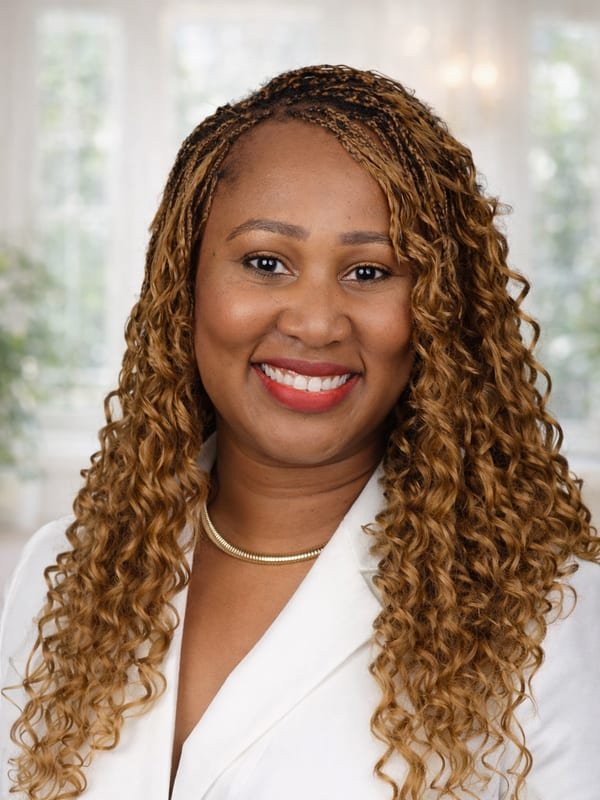
Esther Jackson-Stowell is a licensed real estate broker, real estate educator, and host of The Broker’s Table, a podcast for faith-driven women building generational wealth through property ownership and legacy planning. She has guided 200+ families through real estate decisions and produces new episodes every Thursday at https://thebrokerstable.com.
Educational Content Only: The content on this page is for general informational and educational purposes only. It is not personalized financial, investment, legal, or tax advice and should not be relied upon as such. Esther Jackson-Stowell is a licensed real estate broker. Her broker license covers real estate brokerage activity in the states where she is licensed; it does not authorize her to provide personalized securities investment advice. Results discussed are illustrative of specific circumstances and are not typical. Past results do not predict future outcomes. Consult a qualified financial adviser, licensed attorney, or CPA before making any financial decision.
Frequently Asked Questions
Can I invest in real estate as a single woman?
How much money do I need to start investing in real estate?
Is it a sin to be a landlord or to make money from real estate?
What is the best real estate strategy for beginners?
How does real estate build generational wealth?
What credit score do I need to buy a rental property?
Do I need an LLC before buying my first investment property?
How do I balance tithing and investing?
What if my husband and I disagree about real estate?
How long until my first property cash-flows positive?
EDUCATIONAL CONTENT NOTICE
Educational Content Only: The content on this page is for general informational and educational purposes only. It is not personalized financial, investment, legal, or tax advice and should not be relied upon as such. Esther Jackson-Stowell is a licensed real estate broker. Her broker license covers real estate brokerage activity in the states where she is licensed; it does not authorize her to provide personalized securities investment advice. Results discussed are illustrative of specific circumstances and are not typical. Past results do not predict future outcomes. Consult a qualified financial adviser, licensed attorney, or CPA before making any financial decision.
Free: Your First Rental starter + 3 more guides.
Request an email copy and get the download links.