
The Broker's Table · Episode 1 · October 20, 2026
Still Paycheck to Paycheck on $100K? with Kenneth Botwe
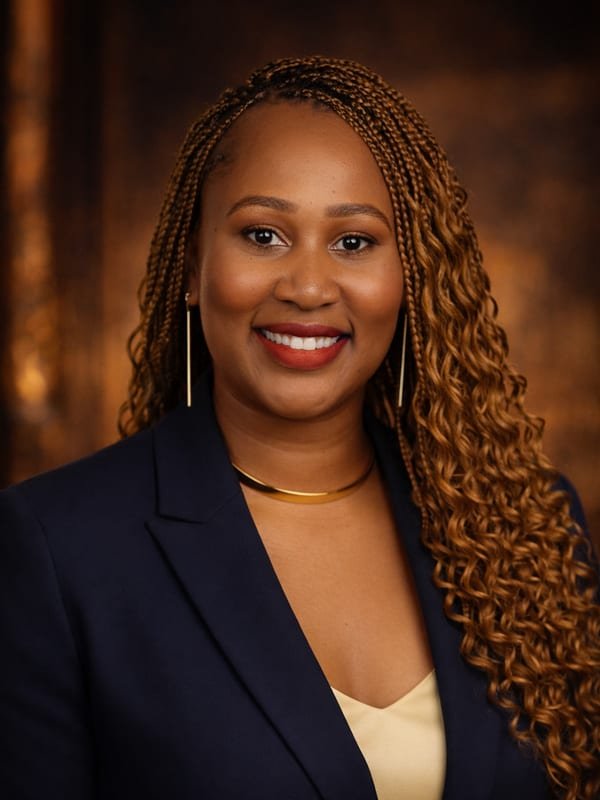 Esther Jackson-Stowell
47:08
 47:08
Open the audio directlyUse the player to pause, seek, or change playback speed.
Many earn substantial incomes yet remain financially precarious. Esther and Kenneth Botwe examine why greater earnings do not automatically translate to lasting wealth.
At the table
Esther sits with Kenneth Botwe, author and financial educator, to explore why a high income often fails to secure lasting wealth. They discuss the critical difference between earning and retaining.
What this conversation covers
- The paradox of high income and financial struggle
- Identifying and addressing financial leakage
- Strategies to make income work more effectively
- Kenneth Botwe’s journey from poverty in Ghana
- Understanding your personal financial metabolism
A line worth keeping
He believes earning more money does not automatically lead to financial security.
Mentioned in this episode
- Kenneth Botwe
- Financial Metabolism (concept, assessment, brand)
- Why You Can’t Get Ahead Financially? by Kenneth Botwe
- KennethBotwe.com
- FinancialMetabolism.com
- The Broker’s Table community, for women building faith, family, and lasting wealth
The Broker’s Table is hosted by Esther Jackson-Stowell. New conversations on faith, family, and the kind of wealth that outlives you.
Episode transcript
Esther It's a lot of folks that make, let's say, 50,000 a year, 60,000, 100,000. And you'll be surprised. A lot of those folks are still living paycheck to paycheck. So the problem is not what you're actually making. It's what you're doing with the income that's coming in. It's what your income is because you can live paycheck to paycheck until I hate to save until the day you die. Welcome to the Broker's Table, where we explore the ideas, decisions and the strategies that shape financial growth and lasting wealth. Today we're joined by Kenneth Boteway, an author, financial educator and creator of financial metabolism. We'll be discussing why earning more money doesn't always translate into building wealth, how to identify financial leakage and what practical steps we can take to make our money work more effectively for our future. Kenneth, welcome to the Broker's Table. Thank you so much for having me, Eston. Kenneth Boteway is an author, financial educator and creator of financial but metabolism. A personal finance brand focused on helping people understand the relationship between earning income and building lasting financial strength. His work explores how individuals and families can identify whether money goes, retain more of what they earn, reduce debt, build savings, invest and work toward long term wealth. He is the author of why you can't get ahead financially and developed a free financial metabolism assessment designed to help people evaluate their financial positions through a diagnosis, stage rate and score. I want to share some background and interesting facts about Mr. Boteway. He grew up in the poverty Ghana, sold kerosene and bred as a child. His early experiences shaped his understanding of money and wealth building. He believes earning money. He believes earning more money does not automatically lead to financial security. He also created financial metabolism to help people understand how effectively they convert income into financial progress. His current work and resources include his book, Why You Can't Get Ahead Financially? His website is KennethBoteway.com That's KennethBoteway.com, No Space. And he provides free assessment for financial metabolism at his website at financialmetabolism.com Again, financialmetabolism.com, No Space. And you can also see a lot of his previous interviews on his YouTube page. So our topic today is why income alone doesn't create wealth. And the idea, the core idea that we want you to take away from this is why people can earn money yet struggle to build lasting wealth and how they can make their income work more effectively. Mr. Boteway, we're going to start with your personal journey. So you grew up in poverty and Ghana and sold kerosene and bread as a child. How did those experiences shape your understanding of money and influence the work you do today? Now, before you answer this question, I would like for you to explain what kerosene is to our listeners because most of our listeners are here in the States and they might not really know what kerosene is. So please explain that and how did those experiences shape your understanding of money and influence the work you do today. Okay. All right. Thank you so much for having me, Esther. Yes, I did grow up in poverty and Ghana. Poverty is much worse than a lot of people imagine. But to put it in words, basically, we were very deprived of essential things, basic things like just food, public transportation, and even running water in the house.
Esther So at nine years old, I began working to help my family. And one of the things that I was selling was kerosene. Kerosene is something that is used in kerosene lamps so that folks that don't have electricity will be able to see. And so I'll go out to the filling station as we call it there and get gallons of kerosene. I'll come home and I'll bottle those kerosene into small 22-ounce bottles and put them in a crate and then walk around the neighborhood and sell them one bottle at a time. So it was hard work. That was in the evenings because people use it to light up the area in the evenings so they can see. Some folks might need that to read. Some folks need that just to cook or whatever else they need to light the lamp for. In the morning, I was also so bred. And that was because most people ate bread and tea for breakfast. So I started working early on in my life, nine years old, because I saw the struggles that my mother was going through. So I wanted to help the family. So basically just working and doing those things, shaped and began to give me an idea of what it means to earn money. That's wonderful. I'd like our listeners to be reminded of how old you were at that time. You know, like handling what we would not dare to give our children at your age right now. So I wanted them to understand the impact or just the struggle and how things are so different. So that when you say you grew up in poverty, like these were the things that you were doing to survive and understand where you have come from, you know. And how old were you at that point? You were pretty young. Nine years old. Nine years old. Nine when I began selling the kerosene and bread. And as a child, it was not, it was okay for me to do that because I saw what they would do to help the family. So it was a no-brainer for me to be able to do that. I was actually happy that I was able to contribute. This is a household with just my mom, two small sisters and myself. So even in nine, I felt this sense of responsibility to try to hear about. A man of the house. I love it. I'm also an immigrant to the US. I arrived here at 11 years old. I kind of got dropped off. And I didn't know what was happening. I didn't know what was happening. No one had a conversation with me about migrating here and if anything staying here. Right? And how I had to go from being the youngest child in my household to being the oldest cousin here and just becoming an adult so quickly. And so again, just out of my, for my curiosity, how did you navigate coming here? You said you were here at 15. Did you come here to stay with family? Did your family come with you? You know, what was your situation like? Yeah. So for me, my father left Ghana when my mom was still pregnant with me. So I never met him. So when I got here at 15, we're meeting for the first time. So not only am I traveling far away from home.
Esther I'm from a place, but now I'm meeting people that are family, but I never met him before. So it was, it was quite an adjustment. Yeah. But I was lucky. I got into a house full of love. My father, very loving. My mother, my stepmother, I just said, I just call her my mother because she was a mother to me. She never referred to me as a stepson. So I don't refer to her as my stepmother. You know, she embraced me right away and that made me feel welcome. So that part of it was very stable. But just that adjustment, I had to just, Esther, I thought I spoke very good English when I first got here, but I realized that I didn't. No, you did speak great English. Okay. It wasn't just American English, you know what I mean? So I just think that here, they don't, they can't hear like, we are non-seared things, right? In Africa, we are non-seared every word. And when we come here, because we've got that like British stuff going on. But when we come here, it's like, why are you saying, Auntie? Isn't it Auntie? And I'm like, no, are we talking about ants? No, it's Auntie. And they're just like, why? You know? So you're okay. Yeah. So it was a lot of that. But eventually I adjusted and, you know, kids, we adjust very quickly. So at that age, I was able to make some friends and get up to speed with the lingo. And, you know, and just blend it in. And I went to a school and the school that I went to a lot of the kids from the neighborhood went to the same school. So I was able to integrate very quickly. That's so wonderful. Well, I'm, I loved hearing about your stepmom, your mom. They should take you in and embrace you in a way that not most people experience stepmoms. So I'm glad that you had that experience. And I hope that part of that is why you're here today and why you're able to. Stand tall and be who you are. And I'm, I love that you're now giving that love back to other people in your way with financial literacy and financial. Okay. Now let's talk about income versus wealth. Because I know this is your forte, right? Yes. Yeah. Why does some people earn more money but still struggle financially? And what is the biggest thing they may be overlooking? Yeah. Thank you. That's a really good question. I think that a lot of folks earn money but then that money is spoken for before they could actually put it in places that could help them make financial progress. So income has a few places that it could go every time you receive an income. That income can go into consumption. It can go into debt reduction.
Esther It can go into growth. And a lot of times a lot of folks income no matter how much they make, whether they make just above minimum wage or whether they make six figures. They all a lot of folks fall into the same trap of letting the majority of their money go into consumption. And when your money goes into consumption and you don't allocate any money to debt reduction and growth, then you're basically, you know, you're just living paycheck to paycheck. You're not able to make any kind of financial progress. And a lot of folks don't know that there's ways to be able to measure what's going on, to measure what your income is becoming. And that is very essential. You must know what's coming in and you must know what's going out. You literally have to take a paper and a pen and write down exactly what your take home income is. Then write down all your expenses. Don't leave anything out. Once you're able to see that, then you can begin to stop what I call financial leakage. Financial leakage is basically money that you're spending on things that is not improving your life. Money that you spend on things that's not helping you grow. It's not helping you make progress. So examples of things like there will be subscriptions, fees, high fees, lifestyle inflation. Every time you even earn more money, your lifestyle absorbs it. So it's not building wealth for you. It's not growing. So being able to identify what's coming in and what's going out, you can begin to look for those financial leakages. Once you're able to see them, then you can start evaluating which ones can be adjusted. You can reduce, you can eliminate some of those things. And all of a sudden, now you have some reserves. And then you can use their reserves to do a number of things to begin growth. So one of the things that I know a lot of people talk about, especially when they're struggling with finances, is it's first of all hard to identify. I think you have to get an honest account of what you're doing. And that's where a lot of people struggle with because we don't want to be honest with what we're actually spending our money with. And sometimes it gets just like, oh, I just stopped by, I just wanted to treat. So I treated myself to that ice cream cone or that meal at the fastwood place. And I don't do it all the time, right? But if you really take an honest account, you are doing it all the time. And that's where people I feel struggle with is the honest account. And a good way, let's say you don't want to look back, right? You don't want to look back because you don't want to have that honest account. Well, let's look forward. For the next month, just use one card by everything on a card. And then just print it out and see what you've actually spent your money on. And that could be your honest account to budget what you wish to do like in the future. So I feel that like, you know, what you talk about is just taking accountability, right? Some people do not want to take accountability of, it's a struggle. And I'll say I struggle with that. I used to struggle with that a lot when when my, but my husband, like he really helped me see those things, but it's still a struggle because I know that's my struggle. Now, let's move on to question number three. And this is understanding financial leakage. Okay. You use the term financial leakage. What does it mean in everyday life and how can people identify where their money is going? Thank you. That's another great question, Esther. Basically, I tell my listeners, and I want your listeners to understand to that, the first thing that you have to do is you have to measure what's going on. You cannot improve on anything that you don't measure.
Esther So even if you dread to do this exercise and you have to do it, you have to really get that paper and pen, you need to see it. And you need to be able to identify exactly how much you're earning, or how much money is coming in. Then you need to know exactly what is going out in detail. You need to know line by line what's going out because some things are essential. So those are non-negotiable. You have to have a place to live. You have to have transportation to get to work. You have to have utilities, electricity, water, cell phone, etc, etc, etc. But if you take a closer look, you will see things that is not really essential and is not dramatically improving your life. Those are the things that you can zone in on. You can focus on and see what can not do about those things. Even a simple 50, 100, 200, or 300 dollars in financial leakage multiplied times 12, all of a sudden become thousands of dollars. And so it's very important to identify their leakage. Everybody's leakage is different. But if you write those things down, you definitely identify. And once you identify, if you have a subscription, one subscription that you use all the time and you really love it, okay, we're keeping it. It's okay. But if you have two or three subscriptions, but you barely use it, that's a financial leakage that can be adjusted. It can maybe cancel one or two of those and keep one. If you have high fees and certain things, if you can really go sheet to lower those fees, do it. If you cannot really go sheet by the fees are extremely high, then you have to kick into a different gear, which is debt reduction. Try to get that debt down so that if you have a high interest credit card or car loan or some other form of high interest expense, if you cannot negotiate to bring that down, then your next target is to try to bring the entire debt down to eliminate that debt at some point. And you can do that if you just pull just 50 or 100 dollars from a serious financial leakage, like a subscription, things like just ordering food, right? I don't know all the names of them, but Uber Eats and all these other services. If you have them and you're not using them, or even if you are using them, if there's a way for you to eliminate that, they pull that money in and direct their money towards something that's actually going to help you build your future. And if you have high interest debt, that's one of the areas that you might want to start bringing down. Now, all the money that you get, you abstract from financial leakage, doesn't have to go into debt reduction. A portion of debt can go into debt reduction. If you don't have any savings, if you don't have any emergency savings, that's an area that you need to also start accumulating money towards. You never want to have a disaster if you were to stop receiving income for a month or two. So you want to accumulate up to, optimally, is six months, but everybody got to start somewhere. So I don't expect everybody to be at six months worth of reserves right away, but you could start. So if you abstract a little bit of money from things that is not bringing value to your life, you can split them up and allocate a little bit towards no debt emergency fund so that if any time, at any given point you get an interruption in your income, you have some rainy day money to take care of your expenses. That's one area and then that's an important area also, but then once you're able to pass that, now you want to start using some of that savings towards investment. I always say that the most important thing is to stop the financial leakage, wherever you can and abstract the money, then you allocate some of that money to some of these areas that I just spoke of, but you also eventually want to begin putting stuff towards your future. So that's investment. Then the more one place to start with investment is retirement savings. So you want to be able to make sure that you're doing your retirement savings. Do you have, do you work for a company that does company match? If you do, that's the first area because that's free money. So you want to make sure that you allocate some of your money. Once you're able to
Esther abstract enough money, I say taking full advantage of whatever your company is offering to match. So once you finish with that and you still have some reserves, then you can do the individual retirement account. That's the IRA. So the first two retirements that I want people to really pay attention to is the 401K or similar system based on who you work for. If you work for the school system, it's a different thing. It's not 401K. But if it is 401K, do that. Whatever program your company is offering, if there's any kind of match, do that first and then the second thing will be the individual retirement account. I personally like the rough IRA because since the 401K and the others are actually not taxed, they're taxed at the end. If you do rough, rough is taxed in the beginning. So at the end, you're not taxed again. So once you're able to take care of those two, you still have some money left. Now you can go into the individual investment or different assets if you want to get into a business or real estate and things like that as well. And it's now in no particular order. But the two retirement is essential because now you're talking about at some point in your life where you cannot work. So you want to build that up so that it will take care of you when you get to that stage. Thank you so much for that. There's just so much meat in what you're saying. And I wish we had more time to just break it down for people. Explain what a rough IRA does, what a traditional, yeah, rough and traditional and the difference in what they could do. And then I would like to know what you're found as of today, what the five top financial leakages are for the average person. Okay, all right, very good. I think the first one, a lot of time is subscriptions. And some folks have multiple subscriptions. So you have to really pay attention to that, find it and try to make some adjustments, right, whether to reduce the number of subscriptions or eliminate second things, high interest debt. If you have high interest debt, you want to try to either renegotiate to bring that interest down or you want to start allocating debt, doing debt reduction, I located money there to bring that debt down. The next one will be lifestyle inflation. A lot of folks, as soon as they make more money, they get more expenses, so you live in one place, you make more money and you may upgrade. Or you drive in a certain car, you make more money and you go buy a more expensive car. Or you eat in a nice restaurant that you love, but you make more money and now you want to go to a more fancy restaurant. So all those lifestyle, it's a lifestyle creep, right, it's your lifestyle expansion. So as you make more money, instead of allocating it, it's something to put your growth, it's actually going, it's matching your income. So you don't see any difference there. That's why a lot of folks can make, you know, just 40 or $50,000 a year and can build wealth if they're intentional, right? And you can make six figures or more and live paycheck to paycheck if you're not intentional. So that's, yeah. And then so we talk about the subscriptions and the, you know, the lifestyle inflation, the high fees, what else? People have other things that, you know, they may not need like, storages and just different, different, yeah, those are all those falling to that subscription type deal. You're paying for things every month that you may not need. It's not actually bringing growth, right? It's not helping you make financial progress. What else? I think, yeah, I think how many did I give you? We have three, but I was also thinking about insurances, car insurance. People don't realize that they can truck around. And they just stay on that same insurance that just keeps getting higher and higher each renewal. And just basically insurances, like you have options with that. You should always, you know, look around. Another thing that I wanted to ask you along with the financial leakages, how often should someone do a financial assessment on what's happening? Because you can look today and you can find leakages, right? But then next month, something else happens because even these subscriptions end up having new offers. Your phones have new offers for different lines, and people just get stuck in their plan and don't change things. And that plan just keeps adding more and more, even though the newer plans are a much cheaper offering a whole lot more. So how can a person utilize their financial leakage, like assess their financial leakage? And how often would you recommend that they do so? Because you can look, I'm sorry, one more thing. I know that sometimes this takes a while. It takes a long, you know, you have to kind of allocate time to sit there and assess everything. And if you are a planner, you've got a plan ahead for that and say, every three months, every two months, every six months, I'm going to sit down and look at my finance system that you can plan ahead and make time for. So what would you recommend for someone? Yes, I think the first one that's non-negotiable, everybody should make that assessment. Once you do that assessment and you're able to discover your leakage, then what I recommend is that you work on that leakage first. So you're able to find some things that can be eliminated or reduced. And so you abstract some money and that money, you put it somewhere else, right? Somewhere that's going to actually help you in some of those areas that we talked about, like the dead reduction or the growth, right? Once you do that, I want you to do it for three consecutive months and see how things are going. Because sometimes you may get overly
Esther aggressive and what you're doing may not work out for you. So if that happens, you need the dollar back a little bit. So I want you to test it first. Get some money, abstract some money, put it where you need to make improvements where they're dead reduction or retirement savings or wherever you need to put it. That's actually going to build your financial progress. Do it for three months. And if you're still comfortable with everything, it's fine. Now you know that that system is working. Make that part of your habit, permanent habit, but then go back and do the next assessment at that point. Because now you got that one covered. You got financial leakage covered, right? You've stacked some money, you've put it in the right places. So now you're moving from financial leakage to building stability. Then you go in and you do the next assessment. So you can see where you are because it's not just financial leakage and stability. It keeps going up. You keep getting better and better and better. So the first one everyone should do, after that, you should give yourself three months to get some things in the right places and then go back and check again. After the three months, I'll say every three months you probably could go back and do it. Especially when you were able to identify things that you didn't even know existed because you would just live in paycheck to paycheck. Now you've actually seen that you make an improvement. So motivate it. So you got to keep that going. So you don't slip back into your whole habit. So just live in paycheck to paycheck. So essentially stay away from treating yourself. Once you've seen or come up with a way to treat yourself that is not going to break you financially. Exactly. You can keep your stay up. Just enjoy knowing that you've done something well for yourself and now you can see your leakage. You can see what you've saved from it and then pour that energy into doing better and doing more. Our next question is working on practical steps to building wealth for someone who has bills to pay. For someone who has bills to pay, debt to manage and little savings. What three practical steps can they take to improve their financial situation without necessarily earning more? Very good question. There are points that if you do that exercise, if you write down your take home income and you write down your expenses, all of them. And if you truly examine that and there's no room anywhere, then in your particular case you may need to increase your income. So if you're making, let's just say, minimum wage for an example, but you happen at the same level of expenses as someone that maybe makes double what you make or something like that. It depends on where you live. But let's just say if you're making a comfortable living income, then you want to make sure that you're making enough to cover all those things. But if you are making a substantial amount of money, something where your housing is covered, your transportation is covered, your essential utilities are covered. Then you start looking at the financial leakage as the other things like the subscriptions and the high fees and all of that. And you're able to extract some money from that. So what you want to do is make that assessment just on a piece of paper initially just to see what's coming in and where's it going? What is that money that's coming in becoming? If all of it is becoming fees, consumption, expenses, interest, and things like that, you want to stop some of those things. So that's the first step. And then you direct some of that, tell us something that will give you growth. Most people will find some leakage. So that's why I keep going back to leakage. It's very important. If you don't find no leakage, contact me and I'll help you find some leakage because I haven't met anyone that didn't have any financial leakage. They just don't admit it. But they have them. It's that honest assessment, right? We talked about it. Yeah, you have to really measure what you're doing. And that goes back to what we're discussing. Like if you want to be successful, you have to be honest about what you're actually doing. And if there's no honesty, if you cannot be honest with yourself about what you're doing, then you're never going to get to that successful place. Because that's on like self assessment and honesty leads you towards success. So if you're listening to this, this isn't about comparing yourself with anyone. This is all about you. What do you want to do with your life? How do you want to see your success? Because my success and cannot success and your success will look completely different. Submit perhaps starting with accepting the fact that you do want to be successful. And then this is the work that you have to do to get there. Correct. I once you're able to do that exercise yourself, that's just the basics. Now you want to get deeper and see what's really happening with your money and you need some help to know what first action steps to take, etc. You do the financial assessment. And once you do the financial assessment, it's going to give you a rate. The rate is basically what you were doing when you were looking at all your take home income and all your expenses. But now it's going to give you detailed rate. So you know exactly where you stand, what stage you're in, six stages. So you need to know where you are. Most people are in financial leakage. That's stage one. So there's plenty of room to eventually, you know, yeah, to grow. So once you're able to see that, then you know, at least you have a starting point. Right. So the assessment gives you the rate. The assessment also gives you a score. The score is the overall, the rate is just telling you where your money is going
Esther to help you grow. But the score tells you your overall financial health. Not only where your money is going, but also are you good for the next few months if something goes wrong, right? Are you paying down debt and things of that nature? So that score is the overall health. So when you do the assessment, you end up getting a diagnosis. And that kind of pinpoints everything that's going on within your finances. And then it gives you a prescription. So it's just like going to the doctor, and then you get a prescription. And the prescription tells you what things to work on first. I like that analogy. I think as I'm listening to this, I can see other people feeling like a little stressed. But I also see this as it's one of those necessary things in life that you must do. You can't go from sitting on your couch, and then all of a sudden having a six-pack. You have to put in the work. And yes, sometimes the work is hard. And the hard part would be not watching your favorite show on Netflix, perhaps, for six months. But guess what? That show will be on repeat one day. And you will get a chance to watch the whole thing much faster than waiting for it to be released one at a time. But those are the sacrifices that you make when you want to do something good in your life. When you want to be successful, you have to make some sacrifices. If you're not already there, you have to make sacrifices to get there. And it's letting go of those frivolous things that everyone thinks that they're supposed to have. You don't have to have Netflix. I'm not bagging on Netflix. You don't have to have, what are the other ones, Disney and all those things. So half the time you're not even watching those things. You're on TikTok. And that's free. So what's the point of having those things? It's what Kenneth is talking about about financial leakages. You have other options to see things for free. Use those options if you still want those things. But remove the leakage from your financial platform so that it's not part of your crutch. This is amazing, Kenneth. I love that you have it as a like your ideology that you're going to see your doctor. And if they're going through the steps, assessing you, doing your MRI, doing your scans, doing your blood work, and then letting you know where your leakages are, your health issues, and then giving you the prescription to live and also to thrive. That's part of the word that I'm looking for here today is if you wish to thrive and be successful, these are the necessary things that you must take and do to get there. Kenneth, we're going to talk about one last thing. Okay. And well, to actually, you developed financial metabolism to help people assess their financial position. How does it work and how can someone tell whether their money is actually building financial strength? Okay, excellent. So the assessment gets you started. That's the first step. You can do the assessment, of course, at financialmetabolism.com. It only takes two minutes. Once you're able to do the assessment, you find what's going on in your financial situation and steps to take to correct it. Once you're able to do that, then you work on it for a period of time, I say three months, and then you come back and do an assessment again, and you kind of see what adjustment needs to be made at that time. So financial metabolism as a whole is just taking a closer look at what's going on with your income. What is your income becoming? We know that two people can make the same income and have two different outcomes. 100%. Yes, absolutely. Yes, one can live paycheck to while the other one steadily accumulate assets. So I'm not asking your listeners to go and get a second job because in most cases, they don't even need a second job. They just need to take a closer look. And the first step is doing the assessment. The first step is really just writing it on the piece of paper to see what's coming in and what's going out. And then you want more detail to see what's really going on in a more detailed way. You do the financial assessment. If financial metabolism are coming, then you're able to see that and what to do to improve your situation. So financial metabolism covers that, and then it goes into other aspects. Debt reduction, we have systems to help you reduce debt. We have a debt calculator that you can go into. And it kind of, enter your information and you're able to see which strategy will work best for you. You can use a snowball strategy, which basically you take your smallest balance and pay that off. Or you go to Avalanche route where you take your highest interest and tackle that first. So when you enter your information in there, that kind of helps you do that. So we're focusing on a few things. We're focusing on stopping financial leakage. By eventually we want to reduce debt. We want to bring debt to zero if we can. We also want to make sure that we're growing. We want to work on growth. So that's retirement savings, that's our investments, and that's acquiring assets. So eventually you want to see your financial rate go from financial leakage all the way up to the top, which is exceptional progress. As some people may be listening to this, they might be thinking, oh, that's too far-fetched for me. How do you talk to them to understand that this isn't about comparing oneself to the other, but really about just working with what you have to get you to where you potentially want to be? Yeah, absolutely. I said that, you know, don't stretch yourself out. Just do that simple assessment of writing down what's coming in and what's going out and try to find any leakage. I don't care if it's $10, $50, just find a small leakage. And then when you start to redirect their leakage to somewhere more useful, you start to make progress. When you do that,
Esther you're automatically going to want to know more. So you go and do the assessment, right? Once you do the assessment, now you get more help because it's not only pinpointing the things and giving you an actual diagnosis, but it's also telling you what priority steps to take to continue to grow. So it's not stressful at all. It's just an exercise that is going to help you increase the efficiency of your financial system, right? You're not having to go get a second job. You're not having to do complex mathematical calculations, none of that. You know, you're just taking what you already have, what you already earn, and you're making progress without having to go out and earn more for most cases. Yeah. So I'll say that your listeners should not be stressed out. They should take the first step. Yeah, just take the first step and then take the second step. And it's like a domino effect. Once you take the first step and you take the second step, you've already made a mental commitment. You're also starting to see things getting better for you. Once you start seeing improvement, it's easy for you to be motivated to keep going and improve things. But if you keep going the way that you're going, if you live in paycheck to paycheck, there's no stop today. You can do that indefinitely. You can live paycheck to paycheck until I hate to say, but until the day you die. And that's not, I think, what most people want. You want to be able to accumulate some type of wealth, right? You want to make some financial progress. At the least, you want to be financially free. And that does not mean being rich. It just means that you're able to generate enough cash flow to take care of your expenses. That's all. That means different things to different people. I might need 5,000 a month to be financially free. You might need 6,000. Somebody might need a little bit less. So just being able to do this, eventually you get to the point where you could actually become financially free. I've been financially free for a long time, but everybody's step is different, right? You else may take a little bit longer, but you never get there if you don't start. So don't be stressed out, but do get started. Yes, all I'm hearing is just do it. Just start. Just start. Don't think about it. Just start. Yeah, just do it. Just do it. It's simple. It doesn't cost you anything. And you don't have to go and get another job. So you just, you rearranging what you already have. Absolutely. And our final question for the day, what is one financial habit? You would encourage every listener to start practicing this week. Wow. I would say the first thing you need to do is really getting to a habit of monitoring what's going on in your financial system, especially if you've never done it before. Go ahead and start doing that. So to monitor it is to write down what's coming in and write down what's going out. If you've already done that, then your assignment is to periodically go back and take a look at those again. You always want to see what has changed. What can I shift? Maybe an interest that I was paying three months ago is too high now. I can lower that interest. Then you can do that. Maybe some other adjustment that you need to make. Maybe I used to subscribe to some subscription that I don't really see the need for it now. Then you can eliminate it. So you want to periodically go back and look at these things because you're trying to stop waste. You're trying to stop leakages and you want to redirect their money. So it's a good practice to go back and monitor those things periodically. And I say every three months. I like that. Well, Kenneth, you've been amazing. I'm glad that you're out here doing great things for people and just sharing what you've learned and making the world a better place in your way. And I hope that our listeners can take away a great things from this. Start your assessment. Just start. It doesn't have to be complete. It doesn't have to be the best. But the point is that you have started. And every time that you do this, you get better and better. And the point of this financial metabolism isn't for you to be better than someone else. It's to be for you to grow. And growth doesn't always go this way. It doesn't just always go that way. Sometimes you fall, but you need to just get back up and keep going. Just like the stocks, right? They go up and down. Sometimes they go way down. But they're still going up. If you look at the stocks over 30 years, over 20, 10 years, for five years, it's always projected up. And that's the path that we also need to follow if we're truly trying to be successful in any and everything that we're doing. But in this case, we're talking about financial metabolism, financial freedom, financial wealth, and just doing better and being successful in that way. So, this has been great, Kana. Thank you so much for joining us today. Thank you so much for giving us your time for sharing your knowledge and for sharing what you have created, which is wonderful. And I'm going to go and take this assessment myself. I hope that our listeners will do the same and share it with your families and friends. It's great to be surrounded by successful people. So, why not create it by doing taking this first step and having your own people to encourage you and encourage one another to do the necessary things that's going to help you all be successful. Kana, it has been a pleasure to meet you. Thank you for sharing your story. Thank you for sharing what you've done. And most of all, thank you for being a part of this show and just continuing what we're trying to do, which is to share goodness into the world. Thank you so much, Esther, for having me.
Esther And I commend you for what you're doing to helping the community. I really appreciate it. And thank you so much for having me. Absolutely. Thank you and have a great day.