
Legacy at the Table · Episode 1 · June 19, 2026
Legacy at the Table
Season 2 launches with Esther and Dr. Rich Stowell setting the table for a new season of faith, family, and generational wealth conversations.
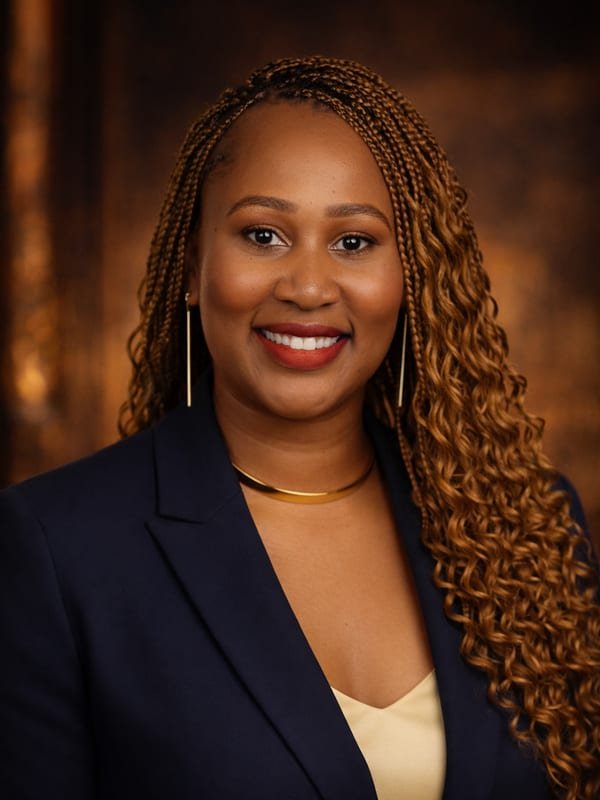 Esther Jackson-Stowell
16:13
Esther Jackson-Stowell
16:13
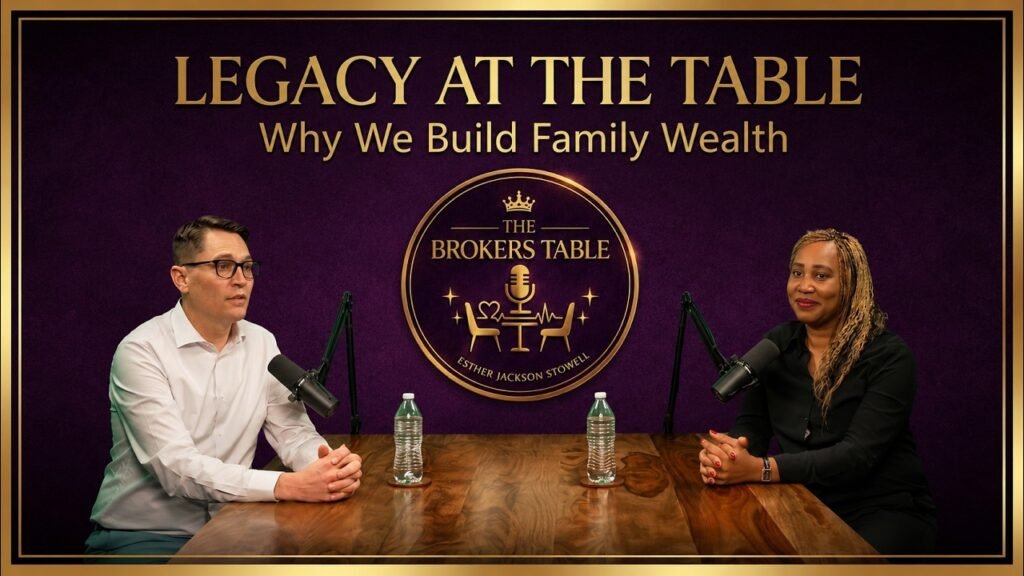 16:13
16:13
Open the audio directlyUse the player to pause, seek, or change playback speed.
From listening to doing
Set your own family table.
Write your shared mission, then choose a regular time for a family money conversation.
Free guideFamily Wealth Mission Statement↗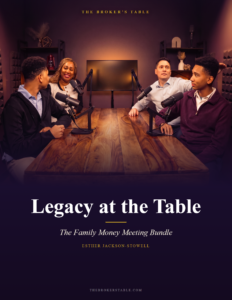 Go furtherFamily Money Meeting Bundle$47.00 · Preview the pages ↗
Key takeaways
- Legacy is not what you leave - it is how you live while you are still here
- Every family has a wealth story that either imprisons or liberates the next generation
- The money conversation is not one conversation - it is a practice
- Building generational wealth requires the transition from earner to owner
- Faith and financial stewardship are not in tension - preparation is one of the oldest expressions of faith
This is where the second season begins, and it is different from anything the show has done before. Esther and Dr. Rich Stowell pull up extra chairs and invite you into the real work of building generational wealth as a family. Real numbers, real mistakes, real wins, and children in the room for all of it.
At the table
Esther and Rich open Legacy at the Table, a season built around one question: how do you actually build wealth that outlives you, with your family involved rather than protected from it? This is not a finance lecture. It is a family showing its work.
What this conversation covers
- Why generational wealth is a family practice, not a private spreadsheet
- The money messages we inherit, and the ones we choose to pass on
- Building with your children in the room instead of shielding them from it
- Faith and stewardship as the foundation, not an afterthought
- What the season ahead will cover, and why the process is the lesson
A line worth keeping
This is not another finance podcast where an expert tells you to skip the lattes and you will be a millionaire.
Mentioned in this episode
- Legacy at the Table, the season built around real family wealth-building
- The Broker’s Table community, for women building faith, family, and lasting wealth
The Broker’s Table is hosted by Esther Jackson-Stowell. New conversations on faith, family, and the kind of wealth that outlives you.
Episode transcript
Esther Here's what nobody told me growing up. Wealth isn't something that happens to you. It's something that you build on purpose, with intention. And the biggest mistakes most families make, they leave their kids out of the conversation entirely. We spent years doing it the hard way, learning from expensive mistakes, figuring things out alone. And one day we looked at each other and said, our kids are not going to start from zero. They're going to start here. This season on The Brokers Table, we're pulling back the curtain. This is Legacy at the Table.
Esther Welcome to The Brokers Table. I'm Esther Jackson Stole, and I'm Rich Stole. This season is called Legacy at the Table, and it's different from anything we've done before. We're pulling up extra chairs and we're inviting you to sit in on real conversations about money, family, faith, and legacy. Let me tell you what this is not. This is not another finance podcast where some expert tells you to skip the lattes and you'll be a millionaire. That's not real life. And this isn't theory. We're not reading from textbooks. This is how we're actually building generational wealth with our children involved, with real numbers, real mistakes, and real wins.
Esther We have four children, and they're going to be in on this show. You're going to hear from them directly. We've been on this journey privately for years, but we kept having the same conversations. Why didn't anyone teach us this? Why did we have to figure this out alone? And we realized if we're asking that question, thousands of other families are too. So we decided to build in public. Not because we have it all figured out, but because the process of figuring it out is the lesson. Here's what we're asking of you. Don't just listen passively. This isn't entertainment. It's education. We want you to pause the episode and have conversations with your family. We've created a workbook, Legacy at the Table, that goes along with this entire season. Every episode connects to specific exercises you can do together as a family. It's designed to be worked through together. Your kids should hear these conversations, age appropriate, yes, but they should be at the table.
Esther In my house growing up, money was invisible. My parents worked hard. I saw that, but I never saw a budget, never heard a conversation about savings or investing. Money was just something that either was there or wasn't. More importantly, money came from a very specific source, my dad. The message I absorbed: money is stressful, so don't talk about it. Money is complicated, so don't ask questions. And somehow money is supposed to just work out.
Esther So when did you realize that that wasn't going to work, and what beliefs did you carry from your childhood into adulthood? Well, it was very interesting because when I got to college, that's where I had to create a budget. Because without a budget, I wasn't able to take care of my bills and take care of things that I needed as well. So I carried this belief that wealthy people were somehow different, like there was a club I wasn't invited to. I thought you either had the money gene or you didn't. I was born into a wealthy family, so I just assumed that would simply be my life. But that was not the case. I had the gene, but I didn't have the skills and the tools.
Esther Okay, so you're in college and you are now starting to realize that life is different from when you were just relying on your dad. Was there a specific moment that you realized something had to change? There are several for me, but the one that stood out the most was paying for my school fees for college. And at the time I had financial aid, so it was easy to have the leftover money, but that leftover funds needed to last for three months because we were in a quarter system. And to stretch $1500 at that time was very, very tough because that money needed to be split between rent, between gas and basic necessities, also including books. So that was the moment that I realized I needed more than just waiting for the leftover financial aid check. I needed to get a job. I needed to get a job and I also needed to figure out how to manage my time because I was also taking classes. So how do I get a job, make money, and then also budget everything so that I wasn't kicked out of my apartment or kicked out of school? So there was a lot to learn. And I'm appreciative of that opportunity, but that would have gone a lot easier if someone had taught me those things. And that's what we're looking to do here for everyone else.
Esther So what was your early relationship with money, and what lessons did you learn from that to carry you over into adulthood? Yeah, growing up, we were lower middle class, I would say. And my parents did fine with the budget, and they tried to teach us how to save, to work hard, to only spend our money on what was necessary. So while it was responsible, we developed a vocabulary around the idea of scarcity, I think. I mean, my parents are both baby boomers. Their parents grew up during the Depression. And so I think they were instilled with that idea that this could all go away at any moment. And I mean, that's a deeply held belief. So it just influenced their practices. And so it was more about holding on to what you have and being responsible with what you have instead of, say, for instance, building more or putting your money to work for you or building passive income streams or looking for more opportunity. So I think I carried that into adulthood. And I'm still learning. I'm still trying to learn lessons to expand beyond that. So what happened when you started...
Esther Making your own money? Well, I think everybody who has that taste of earning has a moment where they can realize something very, very powerful: that I can create, right? And so as a young man, when I started earning, I was faced with that choice. Do I focus on what I have and trying to protect that, or what I could have? And I think that's the difference. Like I remember faced with a kind of a budget crisis one time and my older brother told me, you're always going to have more opportunity if you look for ways to earn what you don't already have than ways to conserve what you do have. I mean, because what you do have is always limited, but what you don't have is unlimited. So if you can go add to that side of the ledger, you're going to be in a much better position. That's a total mind shift.
Esther Absolutely. So I think as far as mistakes go, I would think their opportunities missed to make money work for you, to really harness the power of compounding. How many of us, if we could go back 30 years, or if you're 25 years old, go back 10 years and say, man, if I could just put like $100 in this stock or even just an interest-bearing account and let it compound for 10 years, massive, right? But at our age, if we could go back 20 years to when we were first married and we just put a small amount into these compounding mechanisms and stayed disciplined with it, I mean, it's massive. And we have done that, but you look back and you think, well, why didn't we do more? Why didn't we double that small investment and maybe add incrementally to it monthly? And then we'd be looking at quadruple, quintuple, 10x what our original investment is. So I think that's the lesson that I think anybody at any time should take: just start now, but start. Don't look at what you have right now, look at what it could become into the future.
Esther Absolutely. So I hear compounding and that's what we want to teach our children because they have that opportunity now to learn that and they're young enough to learn that and they don't have the responsibilities that you and I have at the stage in our life. So we want to show them that, and this is what we're trying to show everyone else, to start now. Start now where you are with your children, bring them into these conversations and let them be aware so that they can learn and be comfortable having these conversations. Let me break down something that changed everything for us. There's a difference between income and wealth. Income means money you earn. Wealth is money that works for you. You can have a six-figure income and be flat broke. You can have a modest income and build generational wealth. The difference? Systems. Yeah, I say wealth is confidence. Wealth is knowing how you can put your money to work for you. Many of us live paycheck to paycheck and I know people who make less than I do, but they've got systems in place to build that wealth. To me, they're more confident. They've got more command of their environment. They're more confident going out in the world and that's where we're trying to get. That's where we're trying to get our kids at is knowing what that money can do for you. That's confidence. That's power.
Esther But it starts with some education. Absolutely. Building wealth comes down to three things: mindset, systems, and consistency. Mindset is what you believe about money. If you believe wealth is for other people, you'll never build it. Your beliefs become your ceiling. And systems are the structures that make wealth building automatic: automatic savings, accounts for specific purposes, a plan for credit. And I would also say the discipline that comes with being able to say no to some things so you can say yes to other things down the road. Absolutely. And consistency is showing up day after day, month after month, even when you don't feel like it, especially when you don't feel like it. Here's what most parents get wrong. They think protecting their kids from money stress means hiding money conversations entirely. But silence doesn't protect children. It confuses them. Kids who are never included in financial discussions grow up financially illiterate. And then we wonder why they make the same mistakes we did. Yeah. So our kids sit at our table. We forced them to be included in those conversations about money, about budget, about goals. Yes, we keep it age appropriate, but we let them be participants in our wealth building strategies.
Esther One more thing, where people of faith and our faith teaches us that we're stewards, not owners. The wealth we build isn't just for us. It's a responsibility. That means we're not building wealth to show off. We're building it to serve, to give our children options, to help our community, to leave something meaningful. Yeah, I like what you said about that legacy is not about showing off or being flashy. It's about being intentional. Absolutely. So I think about legacy in terms of like the being stewards, right? We have these things and our job isn't just to come and enjoy it and spend it all and then we die and then nobody else gets to enjoy it. Our legacy is to leave something impactful behind. Sometimes not just money. It's how are people thinking moving forward? Are they growing? Are they growing in faith? Are they growing in wealth? Are they growing in knowledge? Like legacy is not just monetary thing. It's a lot more about it, a lot more and it'll impact the masses, right? Because one person knowing how to do something right will now have a ripple.
Esther I think of legacy in terms of how somebody made somebody feel or how they maybe changed somebody's direction. So the immediate legacy that we think of with our kids is just what direction are we giving our kids? When we pass on, our kids are going to have their own families. What did we do for them? But the real legacy comes in the next generation and the following generation. Are they speaking appreciatively? Nobody's going to speak appreciatively of your money. Like, oh, my grandpa was so great because he was rich. I've never heard anybody say that. But you do hear people talk about legacy in terms of what people did with their interactions with other people. And when you have wealth, when you have that confidence and that independence, you are free to bring your God-given talents to bear in the most incredible ways and not just chasing a paycheck, not just going to work nine to five, but actually making a difference in the world.
Esther Before our next episode, I want you to do what we just did. Write your money story. It doesn't have to be long. Even a page is enough. Answer these questions. What did you learn about money growing up? What beliefs did you absorb? What was your first financial wake-up call? Then share that story with your partner if you have one. You might be surprised how different your stories are. And that difference can explain a lot about how you handle money together. In our workbook, there's an exercise for creating a family wealth mission statement. This is a short statement that captures what money is for in your family. Ours is displayed in our home. Our kids helped us write it and it helps remind us what we're building toward when the day-to-day gets hard. Here's a template. Our family believes money is a tool for blank. We are committed to building wealth. That blank. Our legacy will be blank. Finally, put a date on the calendar for a family money meeting. It doesn't have to be long, 30 minutes is plenty. The agenda is simple. What are we grateful for? What are our goals? What's one thing we can do this month to move closer? Your kids should be there. They have to be there. Yes, even the young ones. They absorb more than you think.
Esther The legacy isn't accidental. It's built on purpose, one decision at a time. You don't need to be rich to start. It helps. You need to start to become wealthy. And wealthy isn't just about the bank account. It's about knowledge. It's about the systems. It's about the values you pass down. Listen, your children are watching, not just what you say about money, but what you do. Make it worth watching. Next week, we're going deeper. Episode two is about the money conversations that most families never have, and why that silence costs us generationally. We'll give you exact scripts for starting these conversations with your family. Until then, do the work. Write your story, start the conversation, and we'll see you at the table. This has been the Brokers Table, Legacy at the Table. Legacy isn't accidental. It's built on purpose.
Esther The content shared on the Brokers Table, Legacy at the Table podcast is intended for educational and informational purposes only. While we discuss principles, strategies, and real life experiences related to finance, family, and faith, watching or listening to this content will not make you rich or guarantee immediate financial success. True growth and lasting results require consistent effort, discipline, and wise application of the knowledge gained. The insights provided are meant to guide, inspire, and equip you to make better decisions over time, not to serve as quick fixes or promises of instant wealth. We encourage viewers to thoughtfully apply what they learn in ways that align with their personal circumstances, values, and long-term goals.