
Legacy Planning
Building Generational Wealth: A Faith-Based Framework
When my grandmother passed, she left her daughters two things.


In this article
- What Generational Wealth Really Means
- What the Bible Says About Leaving a Legacy
- The 5 Assets That Create Generational Wealth
- How to Have the Money Conversation with Your Family
- The Three Biggest Threats to Generational Wealth
- A Simple Generational Wealth Roadmap for Families
- Frequently Asked Questions: Generational Wealth
- Your Legacy Starts Today
What Generational Wealth Really Means

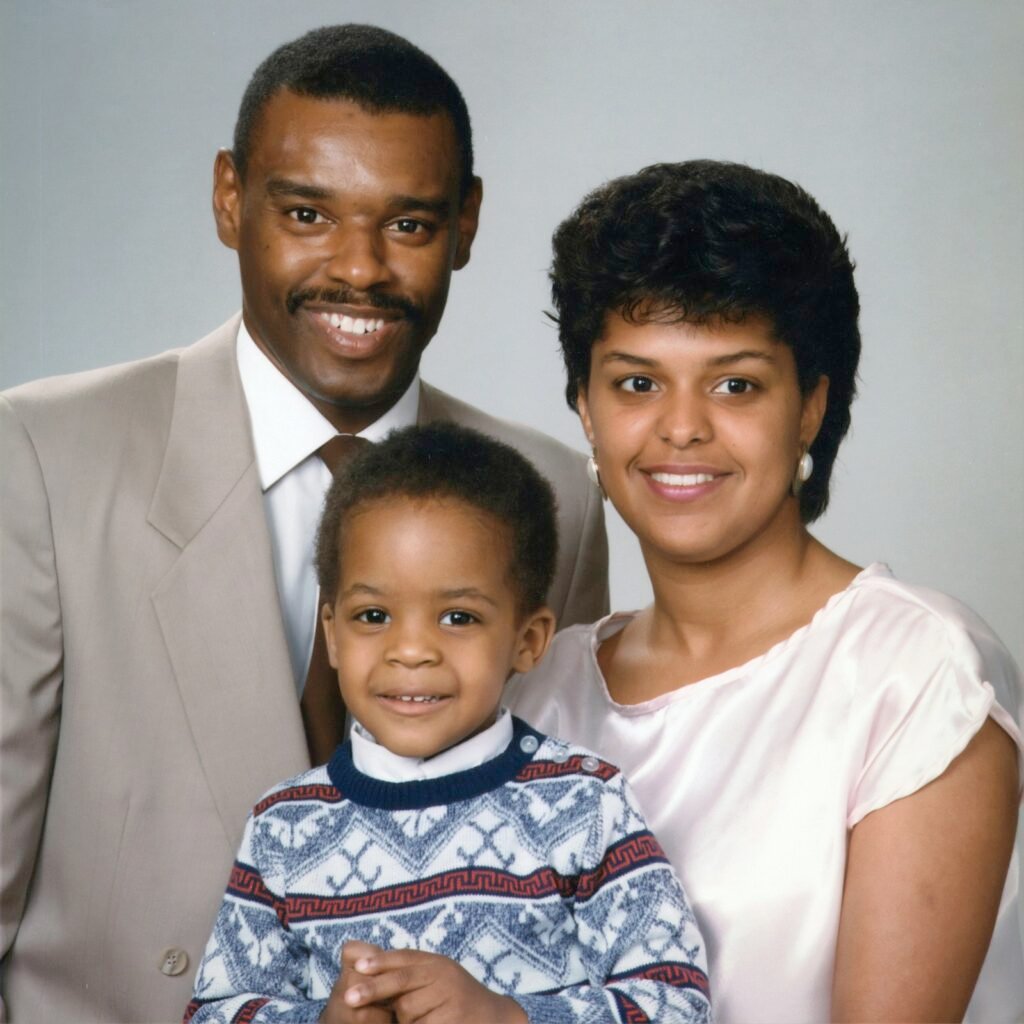
When my grandmother passed, she left her daughters two things. The first was a small box of jewelry. The second was a handwritten ledger of every loan she had ever made to a relative, what was paid back, what was forgiven, and a single sentence at the top in blue ink that said, “Money tells the truth about us.” She did not leave behind a portfolio. She left behind a record. That record was the closest thing to generational wealth her generation could create.
Most conversations about generational wealth start at the wrong end. They start at the dollar figure. They start at the inheritance. They start at the trust. Those are downstream artifacts. The upstream question is the one my grandmother answered in blue ink: what is the truth about us, and what do we want it to be?
Generational wealth is not just money. It is the combination of four things passed across at least two generations: financial assets, productive knowledge, working systems, and shared values. Strip out any one of those four and the wealth corrodes. There are families that received money and lost it within a generation because the knowledge did not travel with it. There are families that had no inherited dollars but inherited a work ethic and a faith and a willingness to start, and built wealth from a flat start. The dollar figure is the thinnest layer.
This guide is for faith-driven families who want to build all four. It is for parents who do not want to repeat their own parents’ financial silence. It is for couples thinking about what their kids’ kids will inherit. It is for the single mom who is the first investor in her family line. It is for anyone who has ever felt the quiet weight of the question, “Did we leave them better than we found us?”
Before you read further, download the free Family Money Meeting Agenda. It is the same one-page meeting plan I use with my own family every quarter. By the end of this guide, you will know how to use it.
What the Bible Says About Leaving a Legacy
Scripture is not silent on inheritance. It is, in fact, almost ostentatiously loud about it. The repetition is the message.
Proverbs 13:22, “A good man leaves an inheritance to his children’s children”
This single verse names the standard: not one generation, two. The blessing crosses your child’s life and lands in your grandchild’s. That is a 60 to 80 year horizon. That is a long enough horizon to change the math of every financial decision you make today. If you are saving for an inheritance one generation deep, your strategy is different than if you are building one designed to land two generations deep. The verse names the further horizon as the standard.
The Parable of the Talents, building vs burying
Three servants are given different sums. Two invest. One buries his portion out of fear. The buried portion is the one rebuked. The lesson is not that risk is virtuous. The lesson is that fear-based avoidance is its own moral failure. Burying capital looks safe. It is not. It is a forfeit of stewardship. We unpack this further in our companion teaching on biblical stewardship in the modern economy and on the stewardship mindset, managing money as a sacred trust.
Generational legacy as an act of worship, not greed
There is a temptation in faith communities to treat all wealth-building as suspicious. Scripture is more nuanced. Wealth itself is not the problem. The orientation toward it is. A family that builds wealth as worship asks different questions: who else will this provide for, what will this fund, what will this teach our children. A family that builds wealth as greed asks none of those questions. The two paths look identical in the spreadsheet and look very different at the dinner table. Read more in our piece on what the Bible says about debt and what to do about it, and listen to our episode on faith and finance, they were never meant to be separate.
The 5 Assets That Create Generational Wealth

There are five buckets that move money across generations reliably. Most families that succeed at this build at least three of the five. The five compound differently and protect differently. Together they form a portfolio that survives.
Real estate, the most accessible generational asset class
Real property is one of the few assets the average family can acquire on a single income, hold across decades, and pass directly to their children. The mortgage is paid down by tenants or by the family’s own occupancy. The asset typically appreciates. The tax code rewards the holding. And, critically, real estate teaches financial discipline by being illiquid. You cannot panic-sell a duplex on a Tuesday. The illiquidity is a feature for legacy purposes. Read our deep-dive at the real estate investing for faith-driven women pillar, and the gateway piece on the real cost of waiting to invest in real estate.
Business ownership, the equity wealth accelerator
Equity in a business you build is one of the highest-leverage wealth assets available. It can be passed, sold, or restructured. The path is harder than real estate but the upside is also larger. Businesses also create employment for the next generation, train them in management, and give them an apprenticeship in capital. For the playbook on the founder-to-legacy arc, see side hustle to legacy, entrepreneurs and generational wealth and from corporate to CEO, building your exit strategy.
Investments and retirement accounts, the compounding engine
Brokerage accounts, IRAs, 401(k)s, and Roth accounts are the boring engines. Boring engines run for 40 years. A Roth IRA opened at 25 with consistent contributions can be a multi-million-dollar tax-free vehicle by the time it transfers to a beneficiary. Compound interest, properly understood, is the eighth wonder of the financial world for a reason. Read our companion post the power of compound interest, why starting today matters.
Life insurance, often overlooked, often the bridge
A properly sized term policy is one of the cheapest and most strategic assets a family can hold during the wealth-building decades. It is not an investment. It is a bridge. If something happens to a primary earner before the wealth is built, the policy pays the mortgage, funds the kids’ education, and holds the plan together. Permanent insurance products (whole life, IUL) are more complex and more often oversold; review them with a fee-only advisor before you buy them.
Education and financial literacy, the asset that cannot be taxed or seized
The most valuable asset in your family ledger is the financial literacy of the next generation. A child who understands cash flow, debt, ownership, and stewardship at 18 is wealthier than a child who inherits $500,000 at 30 with no framework. We cover this in teaching your children about money, a faith-based approach, and in our broader take on creating multiple streams of income as a faith-driven woman and passive income ideas that actually work in 2026.
If you only listen to one episode while you read this pillar, make it the legacy conversation, how to talk money with your family.
How to Have the Money Conversation with Your Family
A wealth plan that is never spoken out loud will not survive transition. Most family wealth that disappears in the second or third generation does not disappear because of poor investing. It disappears because no one was ever told what was there or why.
Why families avoid talking about money (and the cost of silence)
Money conversations are layered with shame, guilt, fear, and intimacy. We avoid them because they touch the place where our values, our fears, and our identities meet. The cost of avoidance is that the next generation walks into adulthood financially illiterate, into marriage financially unaligned, and into inheritance financially unprepared. The avoidance is expensive. The conversation is the bargain.
The Family Money Meeting framework
Once a quarter, sit down with your immediate family for 60 minutes. The agenda is fixed. Five sections: gratitude, current reality, decisions for the quarter, education for the kids, and the closing prayer or values statement. The first three meetings will feel awkward. By the fourth, your family will have a vocabulary. By the eighth, your kids will start raising agenda items themselves. Read why your family needs a money meeting for the full agenda.
Age-appropriate financial conversations with your kids
There are families that received money and lost it within a generation because the knowledge did not travel with it.
ation. A child who understands cash flow, debt, ownership, and stewardship at 18
Listen on the Podcast
Every Thursday, Esther unpacks wealth, faith, and legacy for women building something that outlasts them.
A 5-year-old can understand “save, give, spend.” A 10-year-old can understand interest. A 15-year-old can understand budgeting and credit. An 18-year-old can read a tax return. The goal is not to dump everything at once. The goal is to layer. Each year adds a concept. By the time the child leaves the house, the financial literacy curriculum has been taught.
The wealth mission statement, a family exercise
Write a single paragraph as a family that names what your wealth is for. Not how much. What for. The statement might read: “Our family’s wealth exists to honor God, to provide a stable home for three generations, to fund the calling of each member, and to bless our community.” That paragraph becomes the filter. Investment opportunities that align pass through it. Opportunities that do not, do not. The mission statement is a quiet but powerful governance tool. For couples, 5 money conversations every couple needs before buying property is the precursor to the family-wide version.
The Three Biggest Threats to Generational Wealth

Most families that lose generational wealth lose it to a small set of recurring threats. Naming them is the first defense.
Probate, the silent wealth destroyer
Probate is the court process that distributes assets when someone dies without proper estate planning. It is public, it is slow, and it is expensive. A simple will is the minimum bar. A revocable living trust is often the better tool for families with real estate or significant assets. Both must be drafted by an attorney; this is not a place to use a do-it-yourself kit on the internet.
Family conflict over inheritance
Money is one of the top stressors in any family. Inheritance compresses years of unspoken family dynamics into a single legal moment. The fix is not legal. It is relational. Talk about your estate plan with the family while you are alive and well. Explain the rationale. Do the work of being heard while you are still in the room. The legal documents are the easy part.
Financial illiteracy in the next generation
The third threat is the largest. A child handed $500,000 with no framework will, statistically, have very little of it ten years later. The remedy is the curriculum. The curriculum is the family money meeting plus the values plus the books, podcasts, and conversations you have through the years. The literacy is the inheritance. The dollars are the receipt.
A Simple Generational Wealth Roadmap for Families
There is no single timeline that fits every family. There is, however, a sequencing pattern that fits most. It is laid out in three phases. Each phase is non-optional. Most families try to skip Phase 1 and end up redoing it later.
Phase 1 (Year 1 and 2): Emergency fund, debt payoff, first investment
Build a fully funded emergency fund (three to six months of expenses). Pay off all high-APR consumer debt. Open and contribute to a retirement account, even a small one. Begin a dedicated investment-property savings account. Hold a quarterly family money meeting. Phase 1 is foundational. It is where the family develops the financial muscles that will hold every later phase.
Phase 2 (Year 3 to 5): Real estate, business equity, will or trust
Acquire your first investment property. If you are a business owner, formalize your equity structure. Have a will and, if appropriate, a revocable trust drafted by an attorney. Open custodial accounts or 529 plans for your children. Begin teaching the older children financial literacy at age-appropriate depth. Phase 2 is where the assets begin to take their generational shape.
Phase 3 (Year 5 and beyond): Multi-generational planning, financial education for children, refinement
Add additional properties or business equity. Refine your estate plan with your attorney as the family grows. Begin gifting appreciated assets in tax-efficient ways. Mentor adult children through their own first asset purchases. Discuss the wealth mission statement at least once a year as a family. Phase 3 is the multi-decade work of stewardship at scale. It is the phase most generational wealth literature skips because it does not photograph well. It is the phase that produces the result.
For the bigger context, see wealth-building moves faith-driven women should make before 40 and the real cost of waiting to invest in real estate. And if you are doing this as a single mother, please read building wealth as a single mom, practical strategies.
Your Legacy Starts Today

You do not need a million dollars to begin building generational wealth. You need a framework, a meeting, a mission statement, and the discipline to keep showing up to all three. The dollars follow the discipline. They do not lead it.
Three actions for this week. First, schedule your first family money meeting for the next 30 days. Print the agenda. Second, draft a one-paragraph wealth mission statement and bring it to that meeting. Third, list the three assets in the five-asset framework that you do not yet have any exposure to, and pick one to begin building this quarter.
If you would like to keep going, the two pillars on either side of this one are designed as companions. Read the complete guide to real estate investing for faith-driven women for the most accessible legacy asset. Read credit as a wealth tool, the complete playbook for the foundation that makes most legacy assets reachable.
Subscribe to The Broker’s Table on Apple Podcasts or Spotify. The show is in its first season. We are in the room together at the start.
About the Author
Esther Jackson-Stowell is a licensed real estate broker, real estate educator, and host of The Broker’s Table, a podcast for faith-driven women building generational wealth through property ownership and legacy planning. She has guided 200+ families through real estate decisions and produces new episodes every Thursday at https://thebrokerstable.com.
Educational Content Only: The content on this page is for general informational and educational purposes only. It is not personalized financial, investment, legal, or tax advice and should not be relied upon as such. Esther Jackson-Stowell is a licensed real estate broker. Her broker license covers real estate brokerage activity in the states where she is licensed; it does not authorize her to provide personalized securities investment advice. Results discussed are illustrative of specific circumstances and are not typical. Past results do not predict future outcomes. Consult a qualified financial adviser, licensed attorney, or CPA before making any financial decision.
Frequently Asked Questions
How long does it take to build generational wealth?
How do I start building generational wealth with no money?
What is the difference between wealth and generational wealth?
How do I protect generational wealth from taxes?
What does the Bible say about passing wealth to children?
Should I include my adult children in our financial planning?
How do I balance giving and saving?
What if my spouse and I disagree on legacy priorities?
EDUCATIONAL CONTENT NOTICE
Educational Content Only: The content on this page is for general informational and educational purposes only. It is not personalized financial, investment, legal, or tax advice and should not be relied upon as such. Esther Jackson-Stowell is a licensed real estate broker. Her broker license covers real estate brokerage activity in the states where she is licensed; it does not authorize her to provide personalized securities investment advice. Results discussed are illustrative of specific circumstances and are not typical. Past results do not predict future outcomes. Consult a qualified financial adviser, licensed attorney, or CPA before making any financial decision.
Free: 4 faith and money guides to start today.
Request an email copy and get the download links.