
The Broker's Table · Episode 2 · June 25, 2026
Dreams Wrapped in a Korowai of Love
An honest conversation about the dreams wrapped in a Korowai of love — the cultural and spiritual mantle parents hand to children, and how that mantle becomes the foundation for generational wealth.
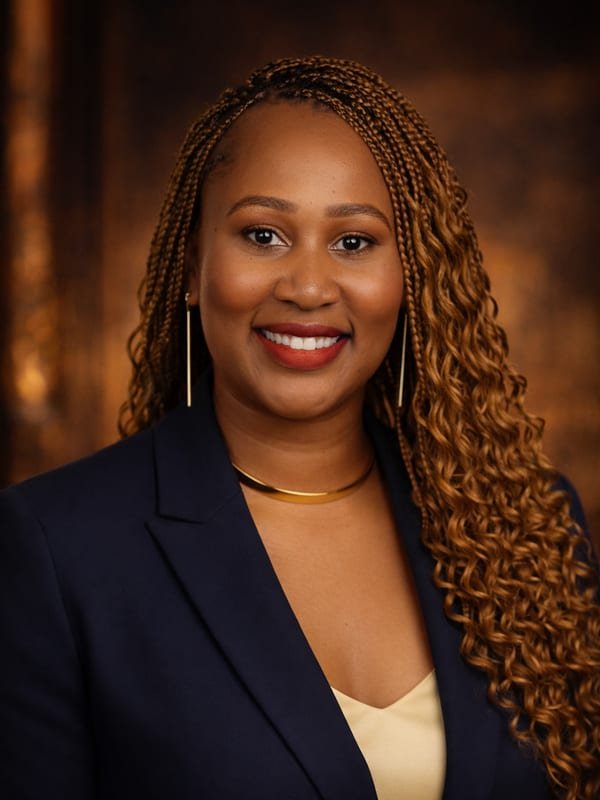 Esther Jackson-Stowell
01:57:51
Esther Jackson-Stowell
01:57:51
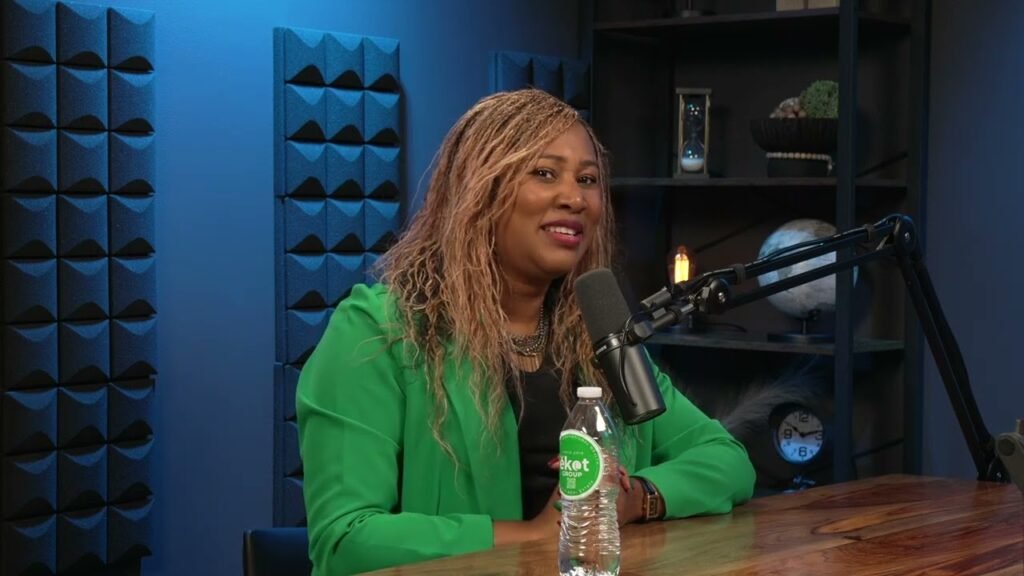 01:57:51
Open the audio directlyUse the player to pause, seek, or change playback speed.
From listening to doing
Write down what your family carries.
Name the values and hopes you want the next generation to inherit.
Free guideFamily Wealth Mission Statement↗ Go furtherFamily Wealth Workbook$37.00 · Preview the pages ↗
A story that spans continents and the quiet ways a calling finds you. This conversation follows a woman whose prophetic dreams pulled her toward a work she never went looking for, and the cultural and spiritual mantle, the korowai, that parents hand to their children as the foundation for everything that follows.
At the table
Esther welcomes a guest whose obedience to a dream became a mission across cultures. They talk about the korowai as a symbol of love and inheritance, the courage it takes to act on something you cannot fully explain, and how faith turns a private conviction into work that serves other people.
What this conversation covers
- What a korowai represents, and why inheritance is spiritual before it is financial
- Acting on a calling when you are an outsider with no obvious platform
- The line between a fleeting idea and a conviction worth building your life around
- Serving communities and schools without waiting to feel qualified
- Passing a mantle of faith and purpose to the next generation
A line worth keeping
I am not well connected. I am not even from this country. Who am I to come in and say this is what needs to happen?
Mentioned in this episode
- The korowai, a woven cloak of honor and belonging
- The Broker’s Table community, for women building faith, family, and lasting wealth
The Broker’s Table is hosted by Esther Jackson-Stowell. New conversations on faith, family, and the kind of wealth that outlives you.
Episode transcript
Esther Welcome to the Berkwell Stable. Today's episode is called Dreams Wrapped in a Choroeye of Love, a story that spans continents, cultures, and the mysterious ways divine inspiration connects us all. Today we explore the intertwined journeys of two women whose paths were woven together by dreams, destiny, and the sacred traditions of the Maori people. This is about prophetic dreams that transcend cultural boundaries, about spiritual gifts, ancient scripture, and about how indigenous wisdom can illuminate the divine connection that binds us. Before we begin, across the world, people have treated dreams as windows into purpose, from biblical Joseph and Daniel to Maori understandings of Guarruwa and ancestral guidance. Science adds that the most vivid dreams typically arise in REM sleep, a uniquely weak-like state where emotion and memory processing run high. So Kerry, your journey with prophetic dreams is remarkable. Can you share three dreams that helped set things in motion for you?
Esther Yes, it was just an ordinary evening, putting my three children into bed, and I didn't realize that when I went to sleep that night that I would be called to do something by the following morning. So my first dream was where I saw children, thousands of children who were going hungry. In this dream, I had an insight into their lives and felt this overwhelming love for them, like that of a mother for her children. And I really felt God's love for them and wished that they could know that I'd had this dream about them. So in this dream, I was shown that they were suffering from hunger. And that permeated into everything else in their lives, because when you're hungry, you can't concentrate at school. When you're hungry, it affects your temper and emotions. It wasn't just that they were hungry. It was impacting everything. It had this knock-on effect. But the thing that was probably the hardest thing in that first dream was the hopelessness that they felt, and I could feel it. And that is something that I really struggled with, because they didn't know it, but they were loved, the children of God. And when I woke up in the morning, I was like, okay, I was given this calling. The words of my dream said to feed the children. And so I knew that was a calling that was given to me. But then as the days rolled on by, being in three kids and just getting on with things, I felt, who am I to even begin this? I'm not well connected. I'm not even from this country. And who am I to come in and say, this is what needs to happen? The doubts started settling in. So I didn't doubt the dream, but I doubted my ability and why I was given that dream. It didn't make sense to me. And so I just put it on the shelf.
Esther But then later, I had another dream. And in this dream, I saw the same children, the same faces. And they were still hungry. And I felt this overwhelming guilt that I hadn't done anything, I hadn't started. And I watched as a team of people prepared food. And then watched as this food was taken to the schools. And so until that dream, I didn't realize that New Zealand didn't have a food in school system. I just assumed that every country had some sort of system. I'd send my kids to school with a sandwich box. But I didn't ever think about those kids that would be going hungry, because I just had this assumption until this dream. And so in this dream, it was clear we need to take food into schools. And I made a promise to those children that I would find them, feed them, and serve them. And so that was the second dream. And that was the time where I leaned over my husband, Matt, for about two hours. When my friends woke up, I startled him from blowing my eyes out over him. And that's when I said, okay, I need to do this, because this is my second dream. And I saw the same kids. So that's when things began in motion. It wasn't like official charity work, but I began delivering food to schools on the shore and the Hibiscus Coast, just to families that needed it. So it might be like one or two families in that school that, for example, in one of the schools, there was a mum that was struggling with chemotherapy treatments. She had several children, and so I would take food into her for free, like to the school for the children. And so just alleviating those needs. I knew that I wasn't actually feeding the children that I'd seen in my dream. But when I look back, those couple of years were good training ground, because it was like finding the right containers that don't leak or finding the right boxes to keep things warm. Just even timings, how long it takes to cook things and package things, and also like ordering the right amount.
Esther Of quantities, because that was okay. And I think those preparations helped lead the way to feed the need. So then it wasn't just a catastrophe when we began. During that time, I had a third dream. And in this third dream, I saw myself standing in a government building of New Zealand. And everyone was wearing really lovely posh clothing. And I remember asking in the dream, why am I here? And it was because of the work in feeding children going hungry. So always throughout the years, I always believed that we were probably there because maybe we're going to share stories of what we saw on the ground, the impact it had on the children. I never thought it would be what it ended up being. But in that same dream, I saw this Māori man just stood by these brown doors, and he was holding keys. And he beckoned for me to come towards him. And in this dream, I walked towards him. And as I walked towards him, he used the keys to open this door and gestured for me to walk through the door. And as I did, I walked into this bright light. And that was the end of my dream.
Esther And so I'm really good at guessing what my dreams mean, and I get it wrong. But I always thought, I wonder what light was? What was that bright light? It wasn't like a constant question. Why would we be in the government building? What was that? Who was that man? Why was he holding keys? Why was I to walk through that door into that bright light? And I just knew that one day I'd meet him. One day I'd meet the children from my dreams, and that it would all make sense. But with dreams, like lucid dreams, they are different to dreams where you might have a dinosaur chasing you or whatever. It's different. And lucid dreams are where you're aware you're dreaming. So it's kind of different. So people often ask, how do you know it was a dream that had a meaning? It was later on that I read up about lucid dreams and how they were different. And it all made sense that, oh, okay, yeah, it was lucid dreams, because I was definitely aware that I was dreaming. I knew I was dreaming, but I was confident that one day I would meet those children and meet that Māori man.
Esther So I have three follow up questions. The first one is you mentioned the dreams and how you were preparing for it. There's a lot of echo of that in the scriptures where whether an angel shows up and then prepares someone for what they're actually going to deal with in life, just as the angel showed up for Mary and let her know that this is what her job was going to be. And there are other things in the scriptures that shows for that. So I'm glad that you mentioned that because it shows that when you have those divine dreams or divine communication, that you're not just left to figure it out on your own, that God has a way of preparing you. Like you mentioned. So I want to know, when you started off with the schools initially, what was it about those schools? How did you communicate with the people to know that this woman needed a little bit of help because she was going through chemotherapy? Like how did you come about with that?
Esther So something that I've not written about or talked about is I wondered how I could find the funds to feed those children from my dreams. So I ended up starting a catering company. And so we'd approach schools and basically bring in lunches to the schools. We charge for them. And then the plan was that my income would go to the charitable meals. And so I wasn't planning to take an income. It was meant to go to the charitable meals. That took a while for any sort of dollars. And it was very frustrating. We just kept having to borrow more and more money, which was difficult. But you asked about how we found out about the families who were in need in those schools. So we'd be taking those lunches to schools, parents would order online. And then we would develop a relationship with the school staff and just say, hey, do you know of any families that could use these lunches and we can do it free of charge? And they always knew. I think the office staff are very aware of the needs in our school. And so they were like, every time they were like, yeah, we know of this family. There was always a two or three per school, two or three families that needed help. And it might be just for a season. And so that was good preparation. There was a couple of years just getting through that. And then eventually the catering company became a cafe in a business complex. And that's really
Esther When I was able to put my income into it, still very limited, minimal, really was. But I was able to make a start once we got into the cafe, if that makes sense. I would also like to point out that your husband, I love that he trusted you when you cried over him and said, hey, there's something I need to tell you. I love that he trusted you and was able to follow through with what your dream was, because that's the support that we all need, where you have a very specific dream and to be able to follow through on that. Matt, we thank you for being supportive and just an amazing husband on that end. First of all, I love what you've done with that and your desire to follow through and not ignore something so important. Recently I gave this presentation where we talked about callings and being able to accept your calling and then persevere to the end. The perseverance side is very hard sometimes because sometimes I tell people that, you know what, I just want to take a nap for a moment. I just want to nap for a moment with this perseverance, but get back up and do it. So I am absolutely grateful that you were called to do this. You accepted that call and you're still persevering through all the wonderful things that you're doing. So thank you for that, Carrie.
Esther Which details made the first and second dream feel like an assignment rather than a passing image, looking back? Worded faith, community, and logistics. I feel like in the first dream, when I was told to feed the children, I knew that was the invite to the calling, the divine calling. And then the second dream was like giving me that nudge. You had to do this. Even though you think you're too busy, you think that you're a nobody, you think you can't have an influence, you think you can't do this and that. It was that nudge to make me go, okay, this is a calling and I'm meant to do something about it. I think it was just, okay, this is just what I've got to do. So the community side of things, when I was doing those meals, just dabbling basically into the charity work, I was becoming a little bit more confident with close friends and family telling them about my dreams. We had people that would, because in the middle of it, we adopted our daughter and we'd just built the kitchen and so on. So we had people step in and say, oh, look after your baby. Let me help with this. Let me pick up your kids from school. So you talk about community, that started at the very beginning. But then as things moved forward, David from a Maori background, the one who I eventually met, the Maori man that was in my dream that I eventually met in person, he said, I want to introduce you to my daughter, because her background, I think, aligns really well with what your calling is. When we actually spoke over the phone, we realized that we had met each other in person several years earlier, not long after we moved to New Zealand. It was in a mother's room. Maybe Lori can just quickly mention that, and then that kind of leads into the community side.
Esther Before we have Lori, I want you to reiterate that dream that you had with Lori's father, just so that we can bring you into that. When she told me that dream, it was just very beautiful first of all. I want the audience to be able to know, because I think there are people out there that do have these vivid dreams. Maybe they don't share it with people. Maybe they don't talk about it, because they're afraid that people won't understand. But I want Lori, when you speak, to be able to share your culture, to let people know that this is very much a part of yours, as it is for my culture as well. But to let people understand that these things are not just today, it's not just happening today, it's been happening in biblical times. And the word is very privy to it in these modern times. Your dreams, especially, they remind me so much of all the dreams, like we have Joseph, the dreamer in the scriptures, and his ability to interpret dreams. What's so fascinating to me is your connection with her father, and how you both had the same dream from different perspectives, and to be able to confirm that is incredibly beautiful. So please, please tell us about that.
Esther After that dream, where I saw this Maori man, I didn't know who he was. I didn't know when the government building thing would ever happen. It was actually quite a while later, we were sat in a conference with my family, and I saw this same Maori man sat on the stand. I turned to Matt and said, that's the man, that's the man from my dream. He was just usual, you better be sure. There was somebody that I knew from behind, but I didn't even have a mobile phone. I literally had one mobile phone book. So I asked somebody if they knew his name and knew his phone, and they did. I thought, okay, I'm going to reach out to him. But then I got nervous. How do I phone a man that I don't know and tell him that I've had a dream? Like, that doesn't happen. And it could be a bit weird.
Esther It took some time, but it was actually on our way. In between that time, we adopted our daughter, and we were going to go visit her biological family in Hamilton. As we were driving down, we were listening to the Beach Boys, eating brownies, and I went past this area. All of a sudden, it was like, the children from your dreams are here. I was just in person's tears. My kids were wondering why I was crying, and Matt was wondering why I was crying, because we were just listening to the Beach Boys eating brownies. I said to my husband, where are we? And he said, South Auckland. I was like, okay. It was like, okay, now I know where those children are from my dream. That was the push I needed, I think, to then have the courage to ring him. Because up until then, I wasn't sure. I didn't know where the children were from my dream. It was almost like I was doing my thing, walking in the dark, just waiting for that next bit of information. So it was like, okay, this is it, this is time, I need to ring him.
Esther After that weekend, we drove home on a Sunday, and I said to my husband, I'm going to go upstairs and ring this man. He was nervous for me. He was just like, you know what I'm like. This is Matt. Matt was nervous for me. So I went upstairs, dialed the number, my heart was pounding. I said, oh, hi, you don't know me. And he said, are you Pākehā? And I was like, yeah. He was just like, okay. He said, are you blonde? Don't ask that. I have highlights. For the sake of understanding, Pākehā means white, Caucasian. He said, I've been waiting for your call. I hadn't at this point told him anything, or anyone outside of my family, just a couple of close friends. Immediately, I'm like, did he have a dream about me? Which again, is not a normal thing, but that was the question. Normal conversation. Hey, how's it going? Did you have a dream about me? Almost like I was testing him. So he talked about his dream. I asked him. I hadn't told him my dream. I thought, okay, what did he dream?
Esther He dreamt that he saw this Pākehā woman, and he added that she was holding a baby, and we had just adopted. That was cool. And then he said that he was told in his dream, she's going to help our tamariki. I said, what does that mean? He said, children. I was like, whoa, okay. And then he said, and it's going to help their whānau. And I said, what does that mean? He said, family. He asked the question, how is a Pākehā going to help our tamariki, our children? And he was told because she has a good heart. When he said that, I was just like, oh my goodness, that's beautiful. I thought, okay, maybe that's all that's needed. I don't need to be a professional. I think as people, we put a lot of pressure on ourselves to be a certain way. But all that was needed was just the heart. That's actually all that was needed. That's something that stood out in that conversation. And then he said that he just seen himself standing in a government building. That's when my brain just exploded. I was on a phone that was attached to the wall, and I literally was walking around with this phone. I was worried that I might pull out the wall. I was just like, oh my goodness. And then he said that he was holding some keys, that he opened a door to me, and that I walked into this bright light. That's when I knew, okay, this is big. These dreams that I've had, please, it's a dream that he's had. There's something bigger going on. This isn't my imagination. I'm not crazy. How do two people have the same dream? So obviously the divine was playing a part in that.
Esther He actually came, he said, I think we need to meet. I said, yeah. And he came over with his beautiful wife. I feel like that conversation was really good for Matt to be involved in, because he's like, finally, she's not crazy. For Matt, it was pretty good for him. I think that kind of helped him. Okay, all right, let's plug forward. But during that meeting, that's what he said. I would just like to also give a shout out to Matt, because Matt, okay, carrying, being able to drain their bank account, he put into this work. So confirmations are great for you, but it's also for Matt to know that this is divine and it is worth following, and that he can trust his Heavenly Father to know that you will be okay, you will all be okay. I'm just thinking as the man of the house and knowing that he's still responsible for your family, to be able to say, you know what, let's do it, and know that you'll be okay. So a huge shout out to Matt. When you also speak, the other biblical stories come to mind. I think of Moses, when he was told to go for his people and he was like, who am I? I'm not capable of speaking in this thing. And so I hear you say, I'm not like, who am I? And God, you are the right person because.
Esther You have a good heart, and that is sometimes all it takes, is just a good heart. Another phrase comes to mind where it says, God doesn't choose the qualified. He qualifies. God doesn't call the qualified. He qualifies you. And I'm probably saying that wrong, but I think it's he equips you. He doesn't call you because you're perfect. He calls you because he wants to perfect you in the process. So our job is to be willing and open to accepting those callings and just trust and have faith that God will truly see you through. And I think of Jesus's disciples. They're like, we're fishermen. No, come to me. I want you to be fishers of men. And there's just so many scriptural opportunities that we see in scriptural stories that link to your willingness to say, who am I? But just I'll have faith that you'll walk with me and just follow.
Esther And that whole who am I, it doesn't just leave. It creeps in different stages. And I think it will be something because I think that's just natural. It's natural. And I think it's something that's a part of humility, right? Because if you walked around saying, yeah, I am that person, right? And I can do it all because God has told me I could do it all, then you're not humble anymore. So that's okay to have that creep in, but as long as you always remember that Heavenly Father will always be there and he will always correct.
Esther So now you've talked about the Mahariman, right? Your father. Lori, first of all, is visiting all the way from New Zealand. I am. And we're so glad to have you here. And I am so excited because it's my first time of meeting you. And the first thing that I did was gave her a little dance on the outside to let her know that she arrived. But there's just a very instant connection that I feel with you. And I see that as well. And so I'm excited to hear your father's story as he shared with you and just how it connected him to Carrie. So do share.
Esther Dad and I were really close. We talked every day. And so obviously after he shared it to Carrie, he called me. And it wasn't just the norm. He called me every day and just said, this Pākehā girl, this Pākehā blonde girl, I had a dream about her and she had his dream. And so for me, my dad has that spiritual gift of dreaming. I couldn't get away with anything. As a teenager, he would dream about it. Even as a career, even there. Come here, let's talk. I'm like, oh no. But it is. It's a real gift to have that. And it's something on our ancestry line, that spiritual gift. My sister has the same gift. And so I don't. And I'm really grateful for that because it's a big responsibility. But I'm grateful for how that has helped me and blessed me. He's shared many, many a dream about warnings and things that I need to be aware of, even pull my husband and I. And before we got married and we were dating, come on, get on with it. So it wasn't unusual for him to share his dreams. And so he shared what he had seen with Carrie and said, I think you need to help her. Can you meet with her? She's got some big mahi or big work to do.
Esther And I said, yeah, I remember meeting Carrie here in the mother's room. And I did feel an instant connection with her. When you say mother's room, tell our audience what a mother's room is. It's probably still a mother's room, but is this church-related mother's room? She was breastfeeding her baby and I was giving a baby a bottle. So in our church, the Church of Jesus Christ of Latter-day Saints, there's a room that's usually close to the bathroom for mothers to be able to nurse while they're there. And usually there's a speaker in there that allows you to still hear what's happening in the chapel. So that's what they're referring to when they say mother's room. So you went in there to take care of your child, she was already there taking care of her child, and you guys met. Yeah, we just chatted. And my background was as a nutritionist, I'm working across New Zealand and different Māori communities. Interesting. Helping just to share different practices around raising the hauora or health of the community. And so using the hauora or health well-being of a community through good nutritious food. I love that you're speaking and you just have this connection with me that I'm like, I understand it. I know. But I love it because I know it's important that I let our audience know what it means. Because I think it's beautiful. I can pick it up, but I know it's beautiful and necessary for them to know what it is. So if I pause you and interject, that's all that is. Thank you. Yeah, please do that. Because I said, I'm going to have to think of the English and English because it's a natural thing.
Esther Yeah, we met and I did recall her from the mother's room. And he saw Carrie at the same conference. He noticed her. So it was meant to be. And yeah, because of my background, I thought, yes, I probably can help. And also, I'm one of eight children and dad was like a baker, a bricklayer initially, and money was hard to come by. And often I went to school without food. And it really impacted my emotional well-being. I really felt a lot of shame because of that. And so I had experienced that myself being in school without food and really had that willingness to help and be involved. Yeah, but also even in my work.
Esther Working with these different communities, I realized, oh my gosh, we can talk about good health and nutrition, but actually the most important thing is, can you afford the food? And it really came to my awareness that this is a widespread issue, food insecurity. And it became one of my passions in my work to really advocate for that. And like Carrie, really purpose driven. And I've never really thought, what career do I want to be in? It's just been, I really feel like this is my path, and I'll take this path and then see where it leads me. And so I felt I'll have a chat to her and felt a real connection and a real desire to help. From your father's dream. But also, when we met, she came over. I was heavily pregnant with my fourth. I had three preschoolers. And so I didn't have a lot of spare time on my hands. And she was a mother of young children as well. But when I met her and she shared her dreams, I felt again those impressions, a real instant need to help her. Whatever I can do to help, I will help her. But I made it really clear. I've got three little kids, not about having another one. I can only do so much. I'm not going to be hands on. I'm just going to help you strategize and build a plan and all the rest of it. So that changed.
Esther So you wrote the book about these dreams. And you told me the story about how you had her read to her father, had Lori read to her father. So I want to just to make sure that my version of the dreams and what I saw and what he saw and what we said, that I had it right. Because I think sometimes we can over time forget things or what. And so I wanted to make sure that it was accurate. And so I asked Lori if she would read it to her dad. Was it when he was in the hospital? I can't remember. I actually can't remember doing that. But she came back and said he said it was all correct. And he added that he'd also recognize me in that same conference. And up until Lori read it out to him, I didn't know that. I didn't realize that he'd actually recognize me. So that was just really nice to learn that, because he did pass away. It was a nice sort of last confirmation. I just wanted to have you explain that moment and just sharing that confirmation, because like you said, there are doubts that creep in the way here and there. And even sometimes even if you absolutely believe it, those doubts would still come through. So I love that you had that opportunity to give her another confirmation of just when he was sending at the pulpit up on the stage, that you, he recognized you in the crowd. And it just has you recognized him. And I think that's just very powerful and just shows the divine and all of that.
Esther And the work that you ended up doing. So this partnership ended up being this incredible thing that the New Zealand government ended up implementing a whole food process for the schools in the school systems. So tell me a little bit about that. So basically we ended up doing a pilot and we did it in a kura. Actually, this was before Feed the Need was actually established. And Dave Varamati opened the door for that. And so we fumbled during that pilot. It was very interesting. And but yet we saw miracles as well. And there was, you talked about earlier community, there was like a whole team of volunteers. And so that particular kura and that pilot, the thing that I remember the most was a miracle to do with baked potatoes. But also the principal of the school asked for the children to ask for us to attend the school assembly and asked the children to come up and give us a hug. And so we were in a line with some of the volunteers as well. I'm going to pause right there. Please explain to our audience what a hongi is. And kura is school. The school at main school. But when you're saying kura, it's a total immersion in the Māori language. So once you walk through the gates, it's all in the Māori language to the Māori. So that's where we went first and piloted because of our connections on my father's connection. And then the hongi is, shall we just become rest demonstrated. Yes, please. Okay. So you just touch noses and forehead and just lean into each other and share breath. That's a way of connecting with the other person. It's very much like, very connected. And it happens just in normal greetings, especially with males when they connect. I think that was, I'd never done that. And so you lined up and the kids lined up and they all gave you. And they'd go to the people along the line. But it was such a special feeling and a special privilege I felt that day. It was my first time experiencing it. For you, obviously, you'd have many of those. Did you think it was special having that with the children? For me, I was crying. When the children were performing, I felt the connection. They were performing traditional songs. And I felt this real love and connection with them. So before we'd even served any food to them, we're all an emotional mess. I think it also like that feeling also confirmed the importance of this work. Like every single one of those children were known to God and precious. And we were having the privilege they trusted us to provide. And the school, they were all so supportive. And yeah, it was just a great experience. We did fumble. There was mistakes made. Of course. I think it's a part of this. We're never doing baked potatoes again. But you know what? And it's the same one with the scriptures. It took Moses some trials before he actually could accomplish what he was set aside to do.
Esther It isn't perfection, but it's perseverance. Your willingness to persevere and fumble and finally get that done where the schools are now feeding those children and their well-being is truly being taken care of. Like you mentioned, when you didn't have food when you were a child and how it affected you, you know that those kids are not going to go to school and feel shame that they haven't eaten or feel this need to act out because they're hungry and they are tired and frustrated and don't know how else to behave. So your work has alleviated those things that you felt and that you went through as well so that they don't have to do that. So now they can focus on school and what's important.
Esther A lot of the focus is often physical because you're filling their stomach, but actually trying to listen when your stomach is growling and it's in pain, it's important to have that physical nourishment, but even more important, and this is from my own experience, is feeding that soul, nourishing the soul, because I wish that I had that when I was growing up so I didn't have to experience that shame. I shouldn't have experienced it because it wasn't my fault or even my parents' fault, but it's just a natural part of being human and being different to everyone else at school who had lunches. But that was confirmed by a number of our young people that worked in the kitchen as we interviewed them. I think every interview, most of them cried and I cried as well. Not untypical for me, but because they all experience the same thing, feeling like their parents didn't love them enough to feed them. And really it was just circumstances. They understood that as they were older, but still those feelings were so raw for them.
Esther Also, some of those kids would take on that burden. I remember a letter saying that when my mum opens the fridge and cries, I know that we're going to go hungry that day. And some of the kids would actually save some of their food and say, I'm going to take it home for my little sister. And even I'm going to give some to my mum. So that burden of food insecurity impacted the whole family. And these kids were really sensitive to that. And so another thing I think that we learned was that it was actually not just filling hungry tummies, but actually knowing that people out there cared. That was the number one thing that I learned. I always thought, okay, we need to feed them, we need to feed them. But I think when we got the letters, the fact that we're caring, you must really care for us, you must really love us, just stuff like that. And so that was really interesting. And we did focus groups at Manurewa South School, remember? Focus groups with teachers and with students as well, just to get underneath what impacts were they seeing and feeling. It was the number one impact that both teachers saw and students felt and expressed to us, and it just confirmed that, didn't it? How important that was. So they weren't alone. Their sufferings were known.
Esther I think along this whole thing, we talk about this book. I think really towards the end of writing the book, I really felt like they knew they weren't alone. They knew that there were people out there that cared for them. Their needs were being met. But they never really knew the dreams. They didn't know about Dallin's dream. They didn't know about my dreams. And I feel like they deserved to know because God knew them before I did. And so that's one of the things that I really hope that comes out of this book, that even if it's just one of the children that read it, they'll understand that their suffering was known to a loving Heavenly Father who had a plan.
Esther I think a lot of times when we are struggling with our own insecurities and things that are going on in our lives, there's a tendency to feel like you're alone in this. But there's something beautiful to know that you're never alone. And it's the same thing that I tell our kids. Even if it seems that way and it physically seems that way because it's just you in that room and you're crying, you're never alone. God is always with you. And I love when Heavenly Father provides people like you that are willing to say, God used me as a vessel to do His work on this earth. And I think for me, that's the prayer that I pray every day, is that He will use me as a vessel to do His work because I cannot do it alone.
Esther You didn't know where the children were, but you felt it when you drove through that area. And you met Carrie a long time ago, but your dad helped you connect in a way that was just completely different and more spiritual and more meaningful. And where you, yes, you still had your children, you still had all your responsibilities, but all of a sudden, because there was a different drive and a different meaning to the help that you were providing her, you were able to carve out time. Her all-in experience was that first dream. And when she first came to me, that wasn't my all-in experience. It was like, okay, come and help her, do a little bit of this, a little bit of that, and just help strategize, because I've got my kids here. And that's a priority, as always. And then we met one night, we're planning.
Esther We were figuring out how to secure the school to do our pilot, and then we were planning out who we could have on the ground, who was going to come in and back to the school. Curie has had an amazing community around her, friends that just wanted to help. She just has that way of drawing people in. So I was really amazed at so many people helping out, and I thought I could play a little role, but I certainly didn't see myself being involved operationally until the night that we met to figure out who we would invite to do that. As we had our little list of people and we were going through it, I felt this huge, like a baseball bat really, of spiritual confirmation in that moment that I was to be the one on the ground, leading out in that space. Curie saw my reaction. Her reaction literally was like, and I'm like, what just happened? What just happened there?
Esther At the time, I was running that cafe, so we were going to use that cafe to prepare the meals and get them out. But I knew I couldn't be everywhere. So that was where we were going through, like, how was this going to work? I can prepare the food, we can get it packaged, we can get it in the boxes, but will I be able to always go down to deliver and just all those logistics? And she had this moment where her eyes literally went wide. Yeah, of course. And so in that moment, I just felt basically, I need to do that. But I don't have this gift of dreaming and having visions. Occasionally I've had some experiences, but it's not a common thing for me. But in that moment, God showed me my path and how it had led to where I am sitting today and how that was an important part of my contribution and preparing me for Feed the Need. It was all for that.
Esther It showed me, I was at university. I'd already done two years. I was doing biochemistry, and I was like, gosh, I don't want to be in a lab for the rest of my life. I was thinking, what can I do? My two friends were going to a different university. I was flicking through the prospectus and then nutrition popped up. I said to them, I'm going to do nutrition. I'm coming with you guys to the South Island of New Zealand to study. And I always thought that was random. But actually, what I was shown in that moment was that wasn't random. I was 19 years old, had already done two years. It wasn't random. It was the Spirit saying, this is what you need to do. My path was being laid in front of me. It had been. That was no coincidence.
Esther And then my first job exposed me to so many different Māori communities and even propelled me into leading in a national indigenous role at only 24 years of age, which I did not feel prepared for. My mentor who was in the role said, I'm retiring, you're to fill my shoes. I thought, I can't do that. I spoke to him literally every day for six months. What do I do in this situation? But I was shown how I was connected into that job, my mentor preparing me for that role and supporting me, and how that was all to lead to helping Curie and her work with Feed the Need. So that was my all. And I thought, this is my purpose right now.
Esther Well, that's all I needed. Although I cried all the way home and called my husband. He was in between jobs, and it was the bottom of the economy back then. He couldn't find work. Whilst I called him and cried to him to tell him what I was doing, how am I going to do it with three little kids? He said, I think you need to find a job. I think you need to go out and find work. I said, I can't. I've got other work to do. We need to figure it out another way. And it wasn't easy. The next week, our little neighbor came over and said, you do training. I can get you into a job next week. Heavenly Father tests you, and he really did bless us. But it required a lot of faith, perseverance, and commitment. My kids always say to me, Mum, if Heavenly Father told you to divorce Dad, would you do it? Testing me and asking me questions. I know that I don't know. I just can't not do it, no matter how hard it is. And I think that's why it worked, because we both just had this conviction that this is what we're meant to be doing. It's not going to be easy. We're going to make mistakes. We're going to have to persevere. But we're both in for the long haul, whatever it takes, however long it takes.
Esther It did take my time, perseverance. That's what I tell you guys. Sometimes I just want to take a nap in the middle of perseverance. But you just get up and keep going. So we ended up taking on more schools. And then the Salvation Army actually let us build a big commercial kitchen in their building that they could use on the weekends and that we could use during the weekdays. That was a great partnership. And then we just kept expanding the numbers of children we fed and also the schools. But in the end, a woman named Jacinda Rodden, we met and she ended up joining our board. We were working together with her, and we didn't know at the time that she was going to...
Esther Become the Prime Minister of New Zealand. She was actually a nobody back then. I want to have a road map of everything that led you to this and then how you join and then now on this person because that is absolutely incredible. It would be great to have that individual. Kick your apron to do it. My husband's after sick. Something for him to do. So when I met Cinder, I really felt that she was going to move mountains. That was why I actually found Laurie and said, I think she's going to move mountains. We need her on our board. Do you remember my response? You're like, she needs to be on our board. And I said, no, she can't be on our board because of the political stuff. Politically, she's aligned to a political party and then we could be seen to be aligned to a political party. It's too, I don't like the idea. She goes, I know, I know. Just meet her and then you'll know. I met her and I'm like, okay, yeah. And I think she was also meant to be on that. She already had a history of philanthropy. She'd worked in a soup kitchen in New York. She'd done all these things. So she was passionate about alleviating food insecurity. And I think with everybody, we're not always going to agree on everything. That was one thing that we definitely agreed on, that the food insecurity needed to be addressed. And she was definitely very passionate about it. I just felt like she was going to move mountains. When Laurie met her, she felt the same thing.
Esther So it was a little bit of a tricky thing getting her onto a board because some people left because of the political party. Most of them left. And that was literally Laurie and I at this particular board meeting went around the corner. And Laurie's, I don't know if you remember this bit, you were just like, okay, let's substitute to make the final decision. And I was just like, gonna lose some good people. But then it was like, okay, I've got to stick to that feeling that it was important to bring her on. And so we did that and we got more people. It ended up being actually really positive changeover. And so then she became quite well known after that. She came out to a couple of the schools, worked in kitchens. By then, she was deputy leader of the opposition party. And then several months later, she became the Prime Minister of New Zealand. And one of the first things she did was we did an in-school program. Imagine if we'd caved to and kept the board members who didn't think it was a good idea.
Esther You were sweating. I was really under pressure. But what I like in that story is that sometimes you are not going to be in agreement with a lot of people when you're trying to do the right thing. And it's okay. As long as you know deep down in your heart that you're doing the right thing. I've been through that situation before with my family. I knew that the path that I was taking and getting married was the right path when people didn't agree. And I stuck with it. I stuck with it not because I wanted to be in disagreement with my family, because nobody wants to be in disagreement with your family. But I knew what God wanted me to do. And I am grateful till today that I took that path, because I have seen my life blessed over and over for sticking to that. So I'm glad that you stuck to that. I just see your father opening that door, putting you in place to help lead her into that light, and that light being that bigger picture of not just this one or two schools, but all the schools now being able to have the food insecurity taken care of. And now you're going to have future leaders of New Zealand who will grow up because they can focus on important things and be able to lead their country and be able to lead families and do much bigger things.
Esther I'm so curious sometimes to see the domino effect of that one child, that youth whose life got changed, who got to go invent something that now is curing some sickness in the whole world and now people are being saved. It's just incredible. So thank you. Thank you for just accepting a calling, persevering, and then just making it such a beautiful thing to just look beyond yourselves, look beyond your insecurities, look beyond the who am I question, and just trust that God will truly lead you and guide you.
Esther And you mentioned the light. I think it really was we both got an email, highly confidential, don't tell anyone. And there was this crown stamp on the letter. The first time, I think I told you I got a scam. So I was ignoring it. And then I didn't know it. So I rang you. I'm like, I got a second email saying highly confidential. Shall I open it? Because I really am bad with technology. So I wasn't sure if it was going to bug the whole computer system. Anyway, but when I opened it, I literally was like, oh my goodness, that's why we're going to the government building. And obviously we could take immediate family with us. You didn't know that I had received the same letter. And then I'm like, can I? Then she called me and she was, I'm not going to tell you this, but I'm going to tell you. I'm coming over because I'm receiving it. And I'm like, I am too. She's like, why don't you tell me? I'd assume because you were over in…
Esther The States by that time, it wasn't a thing. But I was so excited that you were going to be coming over for it as well. And I think the fact that like your dad was there. One of the things that happened up that way, he was there. He was telling everybody, all these strangers, like the guests that were at the ceremony, telling all these strangers about our shared dreams. And people would come up to us and ask, and I'm like, oh, I'm not comfortable with this. And so I shied away from sharing my dreams. And I look back and I really shouldn't have done that. I should have been courageous. And we were talking last night just how bold and faithful and courageous he was. But then Laurie was like, he wasn't always that way. It kind of came later. And so I was like, oh, okay, all right. And he was mocked for it when he was younger, because he would share how he would see someone's dead grandparent or something, thinking it was just normal, natural, is what I would do. And then he would get teased about it, so he just locked up. And it took him a long time to be able to share those things. Probably in his 40s is when he started to share it wider. So he was human. Oh, definitely.
Esther I think that was something that's propelled me to share my dreams. And obviously when he passed away, I made a promise to him that I would. And I've tried to keep that promise. But you talked about the light. And I always wondered, I'd always think, maybe this, maybe that, maybe this. But when I actually went through those brown doors, there wasn't the bright light that I'd seen in my dream. There were guests, there was this red carpet, there were some chandeliers, and I literally was like, why was there that light in the dream? And that's when I had my final understanding that the light was about God's love, God's work, and an invitation to serve and come closer to Christ. And by the time I reached the end of the red carpet, I was a blubbering mess. And so I think I just got that final understanding, which was really beautiful because we were both wearing a korowai. Can you explain for our listeners? Yeah, a korowai is a traditional cloak of kiwi feathers and flax that has been processed. It takes a really long time to put together and sewn on carefully. It takes a long time to do that. And it is something that is used on really special occasions to honour the person that is wearing it. And we were both able to wear one. So first time I had worn a korowai at the age of 40 something. And I didn't know that until we were driving here, to this podcast. I didn't realise that was the first time. So it was just a real special experience.
Esther I was telling Kerry that I thought it would be just like a stuffy kind of no-feeling kind of experience. That's what I thought, but it was so different. I came in thinking, oh, it's going to be hand out your certificate, a bit cold and official. But it was the exact opposite. And I was really blown away by the feeling of reverence that was there and of honour for everyone that was receiving an award. And so I certainly enjoyed the experience and came away like I was on a cloud. For sure. So our daughter's biological family were the ones that asked if I would want to wear their family korowai. And initially I thought, oh, that's probably being insensitive to the Māori culture. Should I be wearing it? Here's that doubt again. I had this little debate in my mind. And so I prayed about it. And when I prayed about it, I was actually driving at the time. And I remember it was just like, this is an extension. They're extending their love and appreciation. This is a good thing. It's an honour, an absolute honour. I emailed back and said I'd be honoured to wear it. But we were talking in the car earlier that I asked what the korowai symbolised, and their particular korowai symbolised the arms of love from past generations, present and future, which is so beautiful. But I didn't realise until Marion, Abby's grandmother, placed it on me. I actually literally felt this overwhelming love come over me that literally took my breath away. And I thought, is Marion feeling the same thing? Does she know what I'm feeling? And she looked up at me as she was tying the string and her eyes were filled with tears. And I'm like, okay, she's feeling it too. And so I love that I had the opportunity because it made it all, like Laurie was saying, it was actually a lovely ceremony with lots of feeling. And it was just a beautiful ceremony. But wearing the korowai also, and seeing Laurie in her korowai, she looked amazing. It was just all that much more incredible. Almost like you've done the works and you're allowed to enjoy this moment. And guess what? You're going to have Abby's ancestors with you. And so that was special. And what an incredible connection to your daughter as well. Just saying that you've gone over and beyond for her people and for her ancestors in the future. You've made a path for the future. And that's huge.
Esther Thank you so much. I want to also touch on what's happening now, you know, with Feed the Need, how if things are still being measured. So Laurie is actually in a really amazing position nationally to do with the Food and School program. So when she was talking earlier about that path leading...
Esther To feeding, she's still having flashbacks to like, oh my gosh, Feed the Need prepared me for what I'm doing now. So her role is pretty huge and her responsibility is pretty huge. And it was just at once, but then the government cut all our jobs. So I'm still there. I've still got my big mouth. So that's what, but we can go into that. Okay, so let's talk about the little boy. So we're at a school and this little boy—it was their pilot school, it was a pilot school. And he came up and said, are you two sisters? And he was looking up and I kind of just giggled because I'm just like, well, obviously. We had a good laugh. But he stood there and we were kind of like, he's like, no, seriously, I'm asking a serious question. So then I'm like, oh, this is a serious question. Because we'd get questions all the time, like what other kids say to me, like, why don't you have any eyebrows? So now I color them in. But I just thought it was just another one of those cute things. But then I realized that he was being earnest in his question. He really was standing there waiting. And so I said, well, we're not sisters, but when we serve together, we feel like sisters. And it's funny because with that, he kind of was like, oh, and then run off.
Esther It's funny because the significance of that interaction didn't really hit me until years later until I was here actually living in America. One morning I woke up thinking about this interaction, and I just felt like I need to write about this. There's a story in this that needs to be heard. And so it kind of took me by surprise because I hadn't really given it much thought until this particular morning. So I started putting it into my notes on my phone and then ended up blubbering my eyes out and really feeling like this is an important message, that if we could all act like we're brothers and sisters, the children who are watching us very closely, how different the world would be if we actually did demonstrate how we should be treating one another. And then also it kind of highlighted the fact that, yeah, we are different. Lori's Māori, I'm English, a Pākehā white. We've got lots of differences, different in cultures and so forth, but which is a beautiful thing having those differences. And I think we should celebrate them. But then at the same time, to remember that actually we have more in common than we do differences, because actually we're all brothers and sisters and there's a loving God that's waiting for us after this life. And so I think that was another message that I felt like I was being taught as I was typing on my phone, blubbering my eyes out. And so that was eventually published. I never planned it. I just put it out on my family and friends Facebook post, but then eventually it was noted by somebody and put forward, and so then it was published. And so it definitely was a message that I think we still need to be reminded of. Children can teach us those simple things.
Esther So when she told me this story, the first thing that I thought, of course he thinks you're sisters, because children are looking at you with spiritual eyes. The veil is so much thinner for them than I feel like with adults. We get, it gets washed away with all the stresses of life—to get a job, go to school, do all these things, and then we kind of get away from that. But with children, they're so pure. And it's part of why Christ tells us to be like children, right? Because they're so pure and it's just the way that they see things very differently. So when you told me that story, the first thing that I thought, well, of course, he's looking at you with spiritual eyes and he just wants to confirm what he's seeing. And when you didn't respond in a way that was confirming to him, it was just like, well, are you? Let me know so I can move on to my next play. And I'm glad that you let him know that, because even though he could see it, obviously he can also see the differences too. And that's why he's trying to connect. And you explaining that to him was just a very perfect way to let him know that, yes, I know we look different, but we are still sisters.
Esther I love that you wrote that down and you said it has been published. Can you tell us where it was published? It was published in the Liahona. And it was interesting, for those that don't know what the Liahona is, it's the Church of Jesus Christ of Latter-day Saints magazine. And so it went from a Facebook post, someone else saw it, and then someone asked if it could be published there, because it was that beautiful and that meaningful, and it's something that we need to be reminded of all the time, because I think sometimes in society we tend to forget. We tend to just, oh, strangers, strangers, that's not my problem. But we are truly brothers and sisters in Christ, and we need to take that more seriously and live that way. We would lay down our lives for our family. I think of my two younger sisters, and we can finish off each other's sentences. We will not sandwiches. And sandwiches. I mean, I'm having a drink and while I'm talking, my sister just grabs a drink out.
Esther You know, there's that closeness and that love that's there, which I think is what he would have seen. We love each other and do anything for each other as you do your brother or sister. And I think that's what he saw. But a wonderful lesson, right? That a stranger on the street is our brother or our sister, and God expects us to show them the same kind of love and affection. You know, one of the refugees that we work with, he's an interpreter, and he told me he has dreams. And I'm like, so I think God can reach everyone.
Esther Oh, absolutely. Absolutely. And so for me, I remember thinking, you know, growing up, the scriptures always seems so like, oh, it's about those people at that time. And then one now is like, well, what's wrong with us? Why would God not talk to us? Why would God not show his presence in our lives today? And when I was investigating our church, that was one of the realizations that I received, was if God spoke to Moses and spoke to all these other people in the New Testament, why would he not? Why would he just leave us and just make us wait for Jesus to come again? Like, he's still talking to us. He's still talking to us through Jesus. He's still here. Miracles still exist. I am a beneficiary of plenty of miracles in my life. I look back on my life and I can see his hand in so many different aspects of my life, that I am here for a reason. I'm sitting here with you guys for a reason. I know you didn't just call me to say, hey, Esther, what do you think about this? No, it's all part of God's plan. And I truly believe in that. And we look back at the book that we wrote together, that story alone is nothing but God's plan. His hand has been in every single part of it. And yes, we had to write that book together just so we can sit here together and talk about something completely different. So I know that dreams are a huge part of how God talks to his children. I know that if we allow ourselves to be vessels to do his work on his earth, that he will truly help and guide us through that.
Esther Culturally, you know, I'm Nigerian. My culture is deeply rooted in spirituality. Even before Christianity came, we're just very—I always believe like Africans are like, we just have such a close connection with spirituality and God, because even before Christianity, the way that we've always lived has always been like there was a higher being. And we all understood that. So growing up for me, we grew up in a very Christian home. We had preachers that would talk about dreams. I remember one dream in particular that one of them had for my sister, who is now a doctor in Ohio. The dream was that she would be wearing a white coat with pens in it. And to us at that time, that white coat meant that she would be a doctor, she would be in the medical field. And that's exactly what she's doing right now in her life. So I remember that dream even as a kid. You hear things, and they're not talking to you, they're just adults talking and they're just there. But I remember that always stood out to me. Part of that dream was the path for her to come to the United States. And that kind of came along with my sister. So to see her accomplish that dream, or help that dream come true, it's just been very impactful in my life. They didn't have a dream about me being a businesswoman, but it definitely had that about her. And it was definitely something that even as a kid, I still remember till today. So I'm interested to know, like, culture-wise, how dreams are seen for the Maori people, and how that impacted your life.
Esther Yeah, like you, it is just the norm in our culture as Maori, very spiritually rooted, a belief in the afterlife, and that our ancestors around us, they are influencing us, talking to us, coming to us in dreams as well. But not everyone has them. In our family, it's a gift that's been passed down from God through the generations. And as I said, my sister has the same gift as my dad. And so it's just been a normal part of conversation. And even like those who don't have Christian beliefs, who are Maori, still there is that belief in the afterlife, that life goes on, that our ancestors are connected to us. So there's a huge alignment with the gospel of Jesus Christ, our church. And that's always been natural and normal for someone to say, oh, you know, my auntie had a dream that this and that, around the table at work, if I'm working in a Maori organization, it's just the norm. And so I particularly have been really blessed to have my father have that gift. And we've had warnings, you know, guidance around our path and what we should be doing and where we should be going. My sister continues that with my dad having passed away. And Kerry's got the same gift. We call it mutakite, which is the seeing eye, being able to perceive and see things that are spiritual, that human physical eyes cannot see. And that's been a real gift and real blessing for our family.
Esther So let me just ask, having seen the same gift that your dad had and your sister has in Kerry, like, does that just blow your mind? Yeah, because it's not something that I would talk to a Maori person about, particularly Caucasian, because it's very—it's not typically...
Esther Aligned to what their belief system often is, and so it was just buzzy for me to see, like, wow. And I think that's why this — well, he didn't say Paki — it was like the skinny Paki. You're like, not fitting the bill of who might typically have that gift. And so it was kind of, it was just weird for me to have someone that wasn't brown that has those same experiences, just like my dad has a feeling that kind of weight of responsibility that comes with it. That my father would carry as well. So it was kind of, yeah, it was really weird.
Esther Well, there was one occasion where we were trying to get this kora to do the pilot. And so before we ended up going, the three of us, David said to me, I want you to share your dreams. And I had not shared my dreams like ever publicly. And so I was just like, that's not happening. There were lots of people at that gathering, but you were in the right place though. Well, it's interesting because of that. So David said, pray about it. And then when I prayed about it, I'm like, you've got to share your dreams. And so I was super nervous. Laurie was my little cheerleader on the side and saying it's going to be okay. But David stood up with his toco toco — we haven't actually talked about that — and was talking in his language. And then he said my name and gestured for me, it was time to stand up. And I remember it was so awkward because I'm like, hi, my name's Karen Owen. But it shifted when finally it was like, okay, just let go and go. And so once I started sharing my dreams, it was interesting. It was interesting for me as this white English girl who'd never publicly talked about my dreams to be in this situation. But what was very noticeable was that their expressions changed. Their posture changed. They sat up and they were listening. Their eyes were locked on mine. And you could see some were crying. And it was in that moment where I was just like, David was right. I needed to share my dreams because otherwise it would just be like, hi, I'm Kerry Owen, sort of thing. But it was, yeah. And so it was like, this is bigger. This is bigger. And trust, trust in what I'm going to say, I guess. And they did.
Esther And it was, you know, I put that experience in the book because I realized that this was a language — dream, talking about dreams. It's a language that I'm already like, respect, trust. And so I think it was probably strange for them to have this English girl. How is she like, right? How is she capable of doing that? I thought it was our thing. And I remember at the end, the principal stood up and said, you've now adopted 180 through children. And because we just adopted our daughter — we adopted a sudden few years earlier — that was like, whoa, that was like extra special, but also that responsibility as well. Like, okay.
Esther It is. And I think, for me, that gave you credibility because you're someone not of their culture coming in. And for us as Māori, trying to regain our autonomy, to be able to make decisions for our own welfare and our own well-being, as opposed to that being put on us and those decisions being made by a government or a community, a white community that doesn't understand the needs and how to do that. It's something that we as a community want to retain that autonomy to make decisions for ourselves and do things for ourselves. So having an outsider come in and say, I can help you, and it's like, no, we can help ourselves. And you think you are coming into your community. You sharing those dreams helped them to see into you as a person and helped them to see your heart. Because I think of the connection that we had. And when I talk to friends who are Māori about our relationship, they're like — I'm like, it's kind of like she's a brown person trapped in a white body. That is how I feel. And it's, you know, race aside, it's more like the values that we hold, the way, you know, of it's all about caring for other people. That is what drives you. It is about, it's not about anything else except the people. I mean, that's what you had at the end of your book as well. It's always about the people. The people, it's not any other kind of motive that's there. That was really clear when you spoke. And so that allowed them to see into you and what was driving you.
Esther It's funny because I kind of knew, although I hadn't been in this country that long, that I was worried that people would interpret my eagerness to help as like, who are you to come here? You know what I mean? Let's not try to be the white Jesus. And it's like, there are people that have that sort of like, we're okay. And you didn't do that. And it takes me back to your dream where you asked why me. And the answer was because you have a good heart. And that's what they saw that day. That was David's dream. Because you have a good heart. And that's it. Not because you're white, not because you're blonde, not because you're blue-eyed, not because you're a skinny white girl. You just, you know, you have a good heart. And at the end of the day,
Esther That's what God sees and wants others to see, and you've gotten a chance to see that. And I saw that from the first time I met you, so thank you. I don't think you're in nature. Like, yes, jumping into being out of the comfort zone. I do feel like the charity work forces you to go out of your comfort zone for sure. When you're sharing that story about dad saying, why is this all this girl help? And I was thinking, well, there are other things as well. That is the most important. That's the most important. But from what I, like, one of the gifts that Curie has is that she is a ridiculous advocate for children or for the vulnerable, right? People can walk all over her. She lets them do that because she's such a kind soul, right? And she won't stand up for herself a lot of the time. But boy, look out because she is a fierce mama bear. And I've seen it. I'm like, I saw glimpses in the video. Oh, my God. She's like, this is a fierce mama bear. You know, when it gets here, it's not. Just share with me, like, how she had an experience with someone kind of attacking her and how she kind of freaked out. I'm like, bring that mama bear out, man. Like, hand it back to her. But that's not how she rolls. But in that space, just where it's about looking after those who are less fortunate, who are vulnerable, she's like, it's who you want on your side, you know? And yeah, being able to persevere with it and just go at it has just been amazing to watch on the sidelines. I think we both advocate in our different areas.
Esther And obviously, I moved here. And it was just kind of like the same sort of thing. Like, I had some dreams. It was like, okay, time to keep going. I wanted that nap. I wanted that time. I know you did. I just say it to make us feel better. I know it definitely exists. But in my mind, when I say it, it just makes me feel just a little bit better. Like, okay, I took that nap, but we persevere. I don't think either of us have taken that nap, right? But yeah, so I kind of feel like I was trying to take the nap. Okay, time to chill out. And then my dad came to me in a dream. That's right. Yeah, because I had an impression that I needed to step back from Feed the Need a couple of years after Kerry left. And it was really hard to do because it had been everything that had been my... I hadn't worked. Yeah, I hadn't really worked or anything. But it kind of led me into doing other work and, you know, eventually ended up in the government, in the school food program that just ended, put in place. And so I was kind of just cruising in that role. And then my manager said to me, I would like you to apply for my job because I'm going into another position. And I'm like, I'm not doing that job because that's full time. I wanted to be part time. I need to be there for my kids and too much work. But dad actually came to me in a dream. And I don't have dreams. Obviously it was important. And basically said, pull up your socks, get off your butt and start leading and do some work. So I called back and said, okay, I'll apply for it. And yeah, I've been in the thick of it within the actual government and the program, which has been an interesting experience. But yeah.
Esther Amazing. Yeah. So I'm still involved with Feed the Need. I'm sitting on the board still, but we've got a team of people now sort of on the ground doing their thing. And so we do food for weekends and school holidays when kids can't access that food. So there's still needs, you know, even though there is this program, there's still going to be needs definitely in the homes, you know, if they haven't, they still might have those empty fridges and, you know, empty cupboards. So that's Feed the Need still going. We were privileged to the Church of Jesus Christ of Latter-day Saints have a thing every Christmas like the Light the World giving machines. Yes. Yes. So we have been able to, Feed the Need being able to be on that giving machine for two years. Okay. So then we're able to kind of do some good work with that, which is awesome. And so yeah, Feed the Need still going. And then over here, I direct a charity called Reach Out Today. Again, dreams have directed that. And both roles, everyone is voluntary based and no one's paid. And so it's just kind of doing the same thing, but very different. I'm meeting very different cultures in New Zealand. I would say, you know, you have the Polynesian cultures and, you know, and we did have some children from different countries. But here, working with refugees, it's very diverse. And then families that are struggling financially, just going into the homes and meeting them and learning about their cultures. And I feel like using them was that almost like preparing at this part, you know.
Esther And so I'm excited to see the next 10 years of Carrie's life and your life because I feel like God is preparing you for a much, much bigger role. And whatever it is and wherever it takes you, I look forward to that to be on the sideline like cheering you on and making sure that you're not dwelling too much in those doubts and just keep going. One of your work that's very dear to me, and I have my assistant who's here who's been able to be a part of that because of what you've done. And when she saw the movie, our movie, she was like, hey, what's Kevin doing there? I know Kevin. And so I know that you haven't got a chance to meet these kids that you've...
Esther There's one in here today with us, and I do want you to meet her because she just was in a chat with you and just thank you for doing that, to be able to have her be a beneficiary of such wonderful work. So I need you to understand that your work is going far and beyond and it's touching lives all over. I may not be in New Zealand to see the kids in the schools there, but I know that your work that's extending here is being felt and it's definitely being utilized in such a good way that Miss Nay over here is a participant in that. So thank you.
Esther So cool. Yeah, this is so cool. I want to like jump across the table. So study shows two-way communication with lucid dreamers during REM is possible, that participants answered math questions and followed prompts without waking. That's not reductive. It suggests God designed a brain capable of active awareness during dreaming. Neuroscience also ties dreaming and spiritual practices to networks of self-awareness, emotions, and memory, a plausible channel for symbolic personal messages that prompt real-world actions. Do these findings resonate with your experience? God meeting you in a state where heart and memory are especially open? Yes. Simple as possible. Absolutely, right?
Esther Yeah. I knew when I was having those dreams that they were inspired dreams. It wasn't something that I'd kind of created in my mind. And there was a Harvard professor that was in an interview. He's a professor of sleep at Harvard, and he was talking about a lot of the research they'd done with dreaming. And it really intrigued me because I had the sort of spiritual understanding of dreams, but I'd never had like the scientific. And so it was really interesting just learning about how they have proved in their research that two strangers can experience the same dream. I'm like, whoa. And they've actually had evidence that some people can see a vision of the future in their dreams, which I'm like, yeah, I dreamt of those children and knew their faces. And when I met them, I knew that they were the ones. So that always, even to this day, sort of blows my mind just that it's incredible that you can actually see people that you've never met before. So it's not just the mind playing tricks on you. It's definitely inspired because how does that happen if there's not a divine power? Divine power, absolutely.
Esther Yeah. So it was really interesting just hearing like the scientific proof that these things can happen. Just kind of like it was the icing on a cake for me, just kind of understanding that. And it also talked about if you're a light sleeper, you're more likely to remember your dreams, and I'm a light sleeper. It even talked about if you've had hearing loss, you're more likely to have lucid dreams, and I'm deaf in the morning. So it's just really sort of intriguing and interesting, and it kind of all made sense and all the dots connected. Yeah. And they do talk about how everything during the daytime, every like tissue box you see, every table, every person, every road sign, your brain is taking pictures of. Yep. And then when you're sleeping, you're processing. And I think that is the science behind dreaming. But this lucid dreaming is different. And yeah, definitely, I feel it's the divine.
Esther Yeah. When you talked about going to that school and speaking to the crowd and people crying because you were sharing your dream, I wonder if that little boy that you saw in your dream was in that crowd. I wonder if just somewhere he's able to hear and connect, maybe he also had a dream and saw you, and just in some way, I would love to hear that connection later on in life.
Esther So in that meeting that I was talking about, it was actually just to the school board. Okay. So I know the boy wasn't there. But the boy that I, the first boy I met, is that the one you're referring to that came to me and stroked my face and told me he loved me? Is that? No, I haven't heard that story. Okay. So yeah, the first boy that I recognized with it was in a school in South Auckland, and he just kind of made a beeline for me and sat next to me. And I wasn't, I was like trying to keep my emotions in check because I just couldn't believe that I was actually seeing him. Yes. And that it's taken so long to find him and just this love that I had for him. And you know, if only he knew, like if I could just tell him the story. But it was interesting because it was like he recognized me. Uh-huh. And that. That's what I'm thinking. Yeah. And I'm pretty sure he had the same dream and that's he just knew. And he just was like, are you an angel? And I love you. He said it first. I didn't say it first. And I'm like, he said it first. I should have said it first. But I think I was just kind of taken away with the whole thing. And it was actually after that we were driving home, and I'm crying at the wheel and Laurie's like, do I always take over driving? I'm very familiar with my life. I'm very familiar with my life. I remember trying to explain it at the time. I don't know if you remember it, but I was like, yes I do. It's like we've laid down the foundation of a road. Yeah. Like we're driving on it. And it's like we're going forward. It didn't make any sense. But it just like everything kind of just was like, wow, we're actually now really doing the work. It had been years of trial and error. And so the fact that I'm seeing the first boy that I'd seen in my dreams, that was significant. But that, it was kind of the pilot.
Esther Of multiple schools. And we only had enough money to do soup twice a week, over eight weeks I think it was, for the winter period. And I was saying to her, let's just wait till we got more money so we can do it properly. And she said, no, we've got to do something. And then that experience happened just from soup twice a week over two months. It had a massive impact on this boy. And then we were like, wow, okay, luckily you didn't listen to me on that one. But I think that was the moment where it was just like, if all this work, all these years, all this effort was only for this one boy, it was worth it. And that was kind of like, even if we did nothing else, all that was worth it for this one boy. Yeah, so it was a real spiritual experience. Yeah, real spiritual experience. And I hope one day I'll meet him as an adult. Yeah, that would be pretty special. That would be more in tune and able to vocalize what he saw as a job. Yeah, I'd be interested to know. Yeah, let me know when that happens. I might be the podcast number two for this. That would be amazing, actually.
Esther The New Testament gives Romans 12, 1 Corinthians 12, Ephesians 4. Prophecy appears repeatedly, spirit given speech that builds up the people of God. Joel's promise quoted in Acts 2 says, your sons and daughters will prophesy, your old men will dream dreams. The Church of Jesus Christ of Latter-day Saints teachings on continuing revelation complements this. God still reveals many great and important things and invites members to seek personal direction for their stewardship. How have you both discerned and tested dreams, scripture, prayer, counsel, and fruits? That's a deep one. That is a deep one. I expect deep answers, only bare minimum. I mean, I think the fruits one, looking back. Yes, you can see the fruits of those initial dreams that David had, I had, and then the impressions that Louise had, just how following those has resulted in children being reached, children being fed, but most importantly, children being loved and cared for by people in their community. The fruits, I think, we literally saw children so joyful and excited about having the food in schools. We were actually able to literally see the fruits of our labors. So that's really what jumped out to me when you asked that question. I've forgotten the rest. My listening comprehension isn't great. It's okay. How have you both discerned and tested dreams with scripture, prayer, counsel, and fruits?
Esther I think about the confirmations that you get in terms of testing to make sure that you're doing the right thing by taking that step to speak to David, her father, and call him. You know, feeling that impression when you drove through that, right? Yeah. And then actually reaching out, just, this is a random person calling you and just saying, hey, I dreamt about you. Like, what is that? You're actually taking that step. So that's being tested. You're testing to make sure you're on the right path, but most of all, you're following through and doing something so important. And it makes me also wonder, after looking back now, do you still have that same dream, or is it different now? Like, when you, if you do dream, do you see those children and are they, what's the outlook? Or did that just end because you feel the job that you were supposed to do?
Esther Yeah, I haven't had any more dreams about those children. I haven't had any sort of like seeing them in the future or anything like that. I think it was kind of like, I needed those three dreams to do that work. Do that work. And then not that Feed the Need isn't doing anything, they are. And it's still alleviating food insecurity. But yeah, I haven't had those same dreams to do with Feed the Need, the charity work there. I'd get new dreams. Yeah, it's kind of like, when we moved here, I'd have new dreams that would, I'd see people's faces and see the work that needed to happen. And yeah, is that what you were asking?
Esther Yeah, I'm just, it seemed that when you had those dreams, until you took action, you continued to have those dreams. But because you took action, it was almost like, you could close that chapter for a certain time, because you've implemented the necessary work that needed to take care of the well-being of the children. Like, you've fulfilled God's request just for that for now. And maybe there will be another part where you'll see. But you've basically given someone else the torch to keep it going and implemented something that will keep going long after we're gone. So I think that's just incredible. I feel like, well, the latest dream that I did share with you, I could share right now. Sure. But I saw myself in a hospital, an old hospital building, and the walls were cracked. And it was very, very quiet. And I saw this woman nursing people. And the way she was caring for these people was incredible. It was like, I was being taught how to really care for somebody at another level. And then this person turned around, and it was Mother Teresa. And I literally was like, Mother Teresa. And she said, I need your help. And then I felt bad, because I was just watching her doing her thing. And then she walked over to me, and she patted my arm. And she said, you'll need these two things. And she handed me a towel and this jar. And when I looked down, it was labeled a balm of Gilead. And I remember thinking, okay, the towel makes sense, because you're always using that when you're serving people. But this balm of Gilead, what did that
Esther What does it mean? I've heard of it, but what does it mean? And then I was trying to make sense of it in my dream, and then woke up. And then I was just thinking, got my phone out, googling balm of Gilead, went and told my husband. And that's when he said, why can't you just have normal dreams? And then he was like trying to find stuff about balm of Gilead. And I feel like it's a message. I think now's the time to bring your faith to the table. Like when you're going out serving, using practical ways, using that towel. Also, you can let those children in New Zealand know that this God had given you these dreams, that he knew them before you did. You can go into a home and just say, the reason I'm doing this work is because I've had dreams that have motivated me to come and serve people like you and let them know that there's a love in Heavenly Father. Absolutely. And that Jesus Christ came to earth and sacrificed his life for us.
Esther And so maybe I'm meant to bring those into those everyday interactions when I'm serving people, because I've never done that. I've never brought my religion or my faith into anything. Like with those children, I never felt it was appropriate. So I had a dream about you. I've always kind of held back telling the recipients and even the young people in that transitional housing, just that love that I feel for them, even though I've not met them, but I'm going to meet one. Yes, absolutely. Like, do you see that? How God is working all this out? Yeah. And how that love that I feel is actually from Heavenly Father and Jesus Christ. And being, I suppose, courageous enough just to let them know that it's not just this woman trying to be nice to do nice things, like to be a little bit more confident and bold with the why. Yes. So that was my latest one that I'm like, okay. Absolutely.
Esther It's funny because I don't have that gift. My challenge is actually taking on that, not counsel, but the direction that's provided by either my sister or my dad around certain things that they've been trying. And often it is very much like you're trying to interpret what the heck does this actually mean? And it's interesting because some in my family, I kind of like me, I don't listen to that. But I've learned just over the years that there's no reason why I shouldn't. These things that have been shown, they've been shown for a reason. And so I see it as a real blessing to do that. But I know even though it's hard sometimes, I get lots of warnings. Like my sister had a dream a few years ago. I just finished reading this finance book and I was on a mission, I'm going to do this, the finances, that, that. And she had a dream and shared it with me, which basically we interpreted it as, if you do that, it's going to cause real issues in your marriage. And there would be this distance between you and your husband. And so I was like, what? This is really good for us. I know it is, but looking back now, it was not the right timing for that. And we weren't prepared to take those steps financially. But we are now, and so we're kind of taking those steps now. But really grateful that my sister was able to share that with me because of that. And so the challenge for me, and it's not a challenge anymore, it used to be, is to take that on board and to be humble and know that that's for a reason. And I need to follow that.
Esther Yeah. Can I add to that? Absolutely. How about Laurie? I remember Matt saying to me several times, I haven't had your dreams. I remember that. So when things kind of are a little bit mucky, messy, difficult, I'm like, but it just is the way it is, we've just got to do it. And then he's like, but I didn't have those dreams. Almost like I've got this added bonus of being able to visualize what needs to happen. But then Laurie hadn't, and Matt hadn't. And what I love about Laurie is that, so for example, there was one story we were just talking about it last night, there was this young boy that I'd seen in a dream, that he was at this crossroads. And I felt like he was going to go down the road. And in the night I texted a mutual friend, Ricky. I just said, listen, you know, this lad, because Ricky had a really good relationship with the youth that were involved in our kitchens. He was running the kitchen. That was kind of like the main tool. As the years progressed, the more children we had, we're like, okay, we need somebody in the kitchen. He was perfect. He was the right person because he just connected with these youth. And so I texted him, I said, you need to take him under your wing. You need to help him. When he comes in this morning, you need to, because he's going to go down the wrong path. And then I get a call later from Laurie. And she's just like, I've heard you've been dreaming again. But Laurie is like, okay. And so the situation with this young lad, Laurie made a decision based on that dream that I'd had, because we were told you need to let him out the kitchen. He's in trouble. He was in a second chance school. And they were saying, you need to kick him out of your program. But because of that dream that night, it was like, no, we need to hold on to him and give him that support. And so Laurie's really good. If I say, oh, I haven't had a dream about this, you know, the Joshua and Jericho thing, she's all in, she's all in, which is quite an amazing thing. Yeah.
Esther Prepared for that with my dad. Yeah, right. Just like, we shouldn't ask, let's just get on with it. That's really neat. Get on with it. I've had dreams where you wake up and it's so vivid. It's so vivid that I wake my husband up and I'm like, okay, so I just had a dream. And then as I'm telling him, I'm like, that sounds so weird. That sounds so weird. So go back to sleep. I'll just write it down. I'll just write it down because I don't want to forget it. And I have like my little on my phone where I'll write them down. And then sometimes it isn't so much that the dream makes sense, but it's the feeling that you have in that dream that it's just like real and intense. It's really intense.
Esther Everyone has this spouse and your spouse gets on your nerve sometimes and they'll do things, but there's something about my dreams that are constantly confirming the love that I have for my husband. And it is the most, I don't want to say weird, but in a very good way, because every time I see him, I tell him all the time, I feel that feeling that I had when I first met you. Like it's still there. And sometimes it's weird, because like, how can it not be? You know what I mean? But it's just there. I don't know how to explain it. And I tell him, I just want to fold you up in a little box and stick you in my pocket and just carry you everywhere. That's how much I love you. And I don't know how to explain that love. And I'm so grateful for him.
Esther So one of the dreams that I had one time, I can't even remember the whole details of it, but the feeling that I had was that he was the voice of reason. Because he's always been the voice of reason for me. My daughter had a hard time getting pregnant with our last child, ended up finding out I had a bunch of health issues and months into the pregnancy. First of all, it took forever to get pregnant, months into pregnancy with diabetic issues. And then they're like, oh, we just found out that she's got a third degree heart block and she might not make it. So I'm left the hospital bawling my eyes out, driving down Fort South, which is like a hill coming down from the University of Utah. And I was just crying. And I called my husband and they said, she has a third degree heart block and she might not make it. And he's like, okay. And they said that she'll need a pacemaker if she does make it. And I remember him just saying, okay, we'll get her a pacemaker. So matter of fact, like it's no big deal. And I remember thinking, huh, I guess we can get her a pacemaker. But more importantly, in that moment, what I felt was that surety in, we'll get her a pacemaker and then we'll just make it work. But it was like his willingness to walk with me. And that confidence and, we don't have anything to worry about, we're in this together, was what I felt in that moment.
Esther I don't know when I first heard the news, why I was so traumatic and drastic. I was pregnant. Yes, I was pregnant. And it took forever to get pregnant. And then like this, strange, good and spacious. But I remember just that little worry, that phrase, okay, we'll get her a pacemaker. And then his voice was just like, and I'll go back to doing whatever I was doing. And I came home and I remember receiving a blessing. His dad came over and I got a blessing. And in that moment, I felt the sense of calm. I remember the spirit whispering to me, there's no reason for you to stress because stress just adds to whatever else will add to negative thing in the pregnancy. So I remember just thinking, okay, we're not going to stress. We're in Utah. Utah has one of the best hospitals for heart issues. I'm literally good. We've got good insurance. The job that I'm doing allows me to have free time to just go sit in the hospital for months. And other people could run around and do the work that I needed to do. So you're good. And you have a spouse who's willing to do this with you. So why stress?
Esther So I remember going to the hospital a week later to basically get all the checklist of what I need to do to go sit in the hospital for the next three months or so. And they're checking those little girl's heart. They're checking it. And they're taking forever. And I'm thinking, hey, I've got, I'm in my sweatpants. I'm ready to take notes and just go sit in the hospital. Like, why is it taking so long? And the tech goes, if I hadn't seen your file, I wouldn't know this was the same heart we were looking at. And I remember thinking, bring your boss over to talk to us because I don't know, you might be seeing something different because we had taken her to the University of Utah, the pediatrics there, the specialist to look. And they're the ones that found the third degree heart block. And it was something that was irreversible. So when she said that, and then the doctor comes in, she's like, huh, I guess it was a fluke. And I was like, let's not play that game. You saw what you saw. The specialist confirmed what they saw. Studies have shown that this is what happens. This is just the only path through.
Esther I didn't say anything. I was like, okay, I'm just going to wait for the specialist to also. So we went back a few days later, especially as they like look through, they didn't see anything wrong with this girl's heart. Not even first, second, let alone the third degree heart block like that they had diagnosed her with. Nothing. Her heart was perfectly normal, beating exactly how it was supposed to be. And I remember they were like, huh, I guess we just... I was like, listen, that was my God performing a miracle. Okay. Because I accepted this. And I had just basically... and I'm a firm believer of God will never give you more than you can handle. And in that moment here, I was like, oh, and my husband was like, okay, we'll get her a pacemaker. But that was God like, you know, just reminding me that this is... if this is what God wants us to handle, he'll make a way.
Esther And I remember thinking like, huh, Heavenly Father, because I was doing research into what it took to have someone with a third degree heart block, like what their life would be. And one of them was that they would be prone to heart attacks. And if they just got scared, they could have a heart attack. And I was like, well, Heavenly Father, she's going to be born into the wrong family. Because I have a husband who is always around the corner waiting to scare people. And a grandfather, his dad, who also does the same thing. And I was just thinking, well, this girl is who these two grown men are going to have to unlearn the desire to scare people. And I was just like, okay, if this is what you feel like we're going to have to deal, they're going to have to learn. And I just remember thinking like, huh, then this is my grandfather, my husband's dad, and Rich, you guys are going to have to really learn to not scare people, right? They will scare strangers. So give people warnings when they come to my house, like listen, my husband will scare you. I'm just giving you a heads up. So I don't know what your scare level is, but expect something.
Esther And then so here we were going to have this child that will have a heart attack every time she would get scared. I'm like, oh, this is going to be a rough, rough life. And so I think maybe Heavenly Father saw was like, Ben and Rich are not ready yet. They are not going to unlearn the habit. They cannot change. So we're just going to take care of this so that she could just be born and not have to deal with that. But I was really grateful for that miracle. And I told people that I would always share this news, this miracle, because I think oftentimes we're so stuck on the scriptures being so far away for the people of that time, that we fail to understand that we can also have dreams. We can also have visions. We can also interpret dreams. We can also receive miracles. We can also receive answers to our prayers with these kids that are dealing with, you know, life of scarcity and feeling alone, that God can put people in their path to let them know that he hears them, he sees them, and he's always there for them.
Esther I can't remember what we're talking about. So we were talking about gifts. So when we talk about these gifts, like what do you do with those when you have those dreams, like how can you capture it? How can you make it so that you don't forget? And especially when they're recurring like that. So what are some things that you do? And then Lori, let us know what kind of, you know, you are receiving in when your father shares this with you. What do you do? You talked about being able to just listen, you know, which is hard. So Carrie, start with what do you do when you have these dreams?
Esther So I used to have a pen and paper next to my bed, and would write down details of the dream when I got up in the night. But now I have my phone, and I make sure before I go to bed that the light, you know, on the settings, the light is low. And then I just put them in my notes. So then to make sure that, you know, there's not one detail that I miss out. And even when I'm like sharing a story, I always think even last night we were just talking, I was like, actually, you know, I'll just read it from the notes because I never want to get it wrong. Like, I want to make sure that it's right. And even with this book, The Gift of Charity, there's experiences there that I shared with somebody else, and just making sure that it was the same for them, like I'm getting it right, I'm not getting it wrong. So I think it's important to write down those details or type the details to make sure that you don't forget.
Esther It's interesting, though, because in my dreams, like, I'll have pictures coming to my mind, almost like also a video almost that you're watching, that I never forget. But it's those, if there's words that come into it, I need to make sure that I put those down. So you were talking earlier about feelings. I definitely still remember the feelings and images that I saw, but sometimes the details, I need to make sure that I write down. So if people are having dreams, I think that would be important to put a pen and paper or have your mobile phone ready. So in the night when you have the dreams, I have sometimes thought, I'll remember this in the morning. And like I can remember things that I saw, but not always the words. And so I've learned that take a note while you can, and then go back to sleep. And it's almost better because then you're not laying there thinking, okay, I have to think about this, I can remember it. Yes, think about it, then you stay awake. So just write it out, get it out of your head.
Esther And move on, and then take the first step. Take a step. I always feel like there was a saying to not suppress a good thought. So if the dream is something that is going to help somebody, help the people that go with it, if it's going to do good, go with it.
Esther Now Laurie, being on the receiving end of other people's dreams and being prompted to act on that, how do you discern what way to go? It's interesting because when my dad or my sister have had dreams about me or my family, often just the dialogue, like the call, and we'll have the discussion, and often they won't really know what it's about. So through that conversation that we have, I talk about, okay, it could mean these things are happening in my life at the moment. Maybe it could be this, maybe it could be that. So for example, the dream that I shared about my sister seeing that distance between my husband and I wasn't straight up. It's about the finances and what book you're reading. We kind of had to figure that out. She was saying, you were kind of like so hyper focused on it, like nothing else, like full on. Is it anything you're totally like full on with at the moment? I said, yeah, I'm reading this book and I went and stayed up all night. I'm like, right, we're going to do this. I hadn't talked to my husband about it yet, but I had our plan all set out. And so we kind of figured out through the dialogue that that's what it was about, and we both felt good about that. Often it's that dialogue that happens. And then even through the conversation, they will remember, oh, I forgot there's this part to it as well that I forgot all about, and we'll bring other parts into it. So I think that dialogue, well, what I've experienced, is really important if the dream is about someone else.
Esther But if you're not a dreamer like me, that's not a spiritual gift that I have that is really dominant, like with Carrie or my father. But at times I have had dreams or visions. And for some people, it might seem strange because it's going to be like, is that real? Does that actually mean something? And so the times where I have, it's good to just actually think, is there a message in here for me, and kind of work through it. What could this mean? Again, the dream I had when my dad came to me, he didn't say you should take that job. I wish it was like that. I was like, why can't they just say it in black and white instead of just all the symbolic language and whatever. Like in the dream I had, it was my dad sitting up on the pulpit at church, and I was sitting to the side like in the corner. And they were actually holding a welcome ceremony, a Māori ceremony, they called a pōwhiri in the chapel, which never happens. But I was kind of sitting to the side and he was beckoning me, come up onto the pulpit, everyone can see. And I said, no, I'm good here. And he got really angry. He stood up and he stomped down all the way around, came to get me and was like, get over here. And I stood up and I followed him and I sat next to him up there. So it wasn't really clear, like it could mean anything. But I just thought, what's happening in my life at the moment that this could apply to? And I just thought it is, it's this role that has come up, you know, a leadership role that I didn't even want to do because I thought, one, I haven't done anything like this for ages, and I don't want to be working full time, thank you very much. But yes, get up and do it. So for people who aren't dreamers like me, who don't often get there, where you have that fear, like I was bawling my eyes out when I woke up, I knew it was important. And so take the time to just really think through, is this a message, a spiritual message from a higher being or from God or from your ancestors who have passed on, just like the message that you got. And think, how does this relate to me now, and what guidance can that provide me?
Esther I just wanted to add that at the end of the book, there was the most recent dream that I had with Laurie's dad. He was dressed really smart, and he looked really well. And he said, "He tangata, he tangata, he tangata." Is that how you pronounce it? Yeah. And that was it. And so I texted Laurie in the morning, and I'm thinking, what does he mean? I knew it meant it is people, it is people, it is people. But I didn't know that there was this whole other part of this proverb, this proper proverb. And so she said, and another friend also commented on the similarity. And so I kind of really delved into that proverb. Like, what is it that I'm missing? What is it? Why did he come to me in this dream to say it is people, it is people, it is people? Like, I know, it's people. So trying to make sense of it, you have to do the work as well. I think you have to be willing to do the work. And so I just kind of really spent a lot of time understanding this proverb. And then really what stood out to me was just like, how serving the one, I'll send you the proverb, but how serving the one has this knock on effect for generations past and future. And I'm like, whoa, that's deep. Okay, it's about serving the one. I don't know, it's just kind of like trying to take those dreams seriously and make sense of them. So kind of just following on what Laurie was saying. You can cut that if you want. I don't know. We will keep that in because that's wonderful. Carrie and Laurie, your lives show that when we honor both scripture and culture,
Esther Both signs and spirit, God's breath weaves us together, from hungry with children to carawai, mantles of service, from dreams at night to love in action by day. This is how heaven touches earth. May we all attend to our dreams, steward our gifts, and wrap our communities in a carawai of love. Carrie and Laurie, your lives show that when we honor both scripture and culture, both signs and spirit, God's breath weaves us together, from hungry with children to carawai mantles of service, from dreams at night to love in action by day. This is how heaven touches earth. May we all attend to our dreams, steward our gifts, and wrap our communities in a carawai of love. Whether we call it prophecy or matakite, wisdom or tohuna council, the test is love. Scripture says gifts are for the common good. Mardi life calls it manakitanga, different names, one giver, sooth.
Esther In REM sleep, the most vivid dream stage, your brain processes memory and emotion. Research has even talked with lucid dreamers during REM, getting correct answers without waking them. If the brain can pay attention while dreaming, no wonder it's a place where God can whisper assignments. Thank you for joining me at The Brokers Table. If today's conversation inspired you, please subscribe, share, and leave a review. I'm Esther Jackson Stole. Until next time, keep brokering faith, family, and freedom.